Natura
The micronutrient concept in connection with detoxification processes and energy metabolism
What does holistic therapy mean?
How does mitochondrial and energy metabolism work?
Balance of the parasympathetic and sympathetic nervous systems
What does the body's detoxification capacity mean?
Mitochondriopathy and its consequences
Some important co-factors
Holistic diagnostics and therapy at Natura Heilpraxis in Berlin
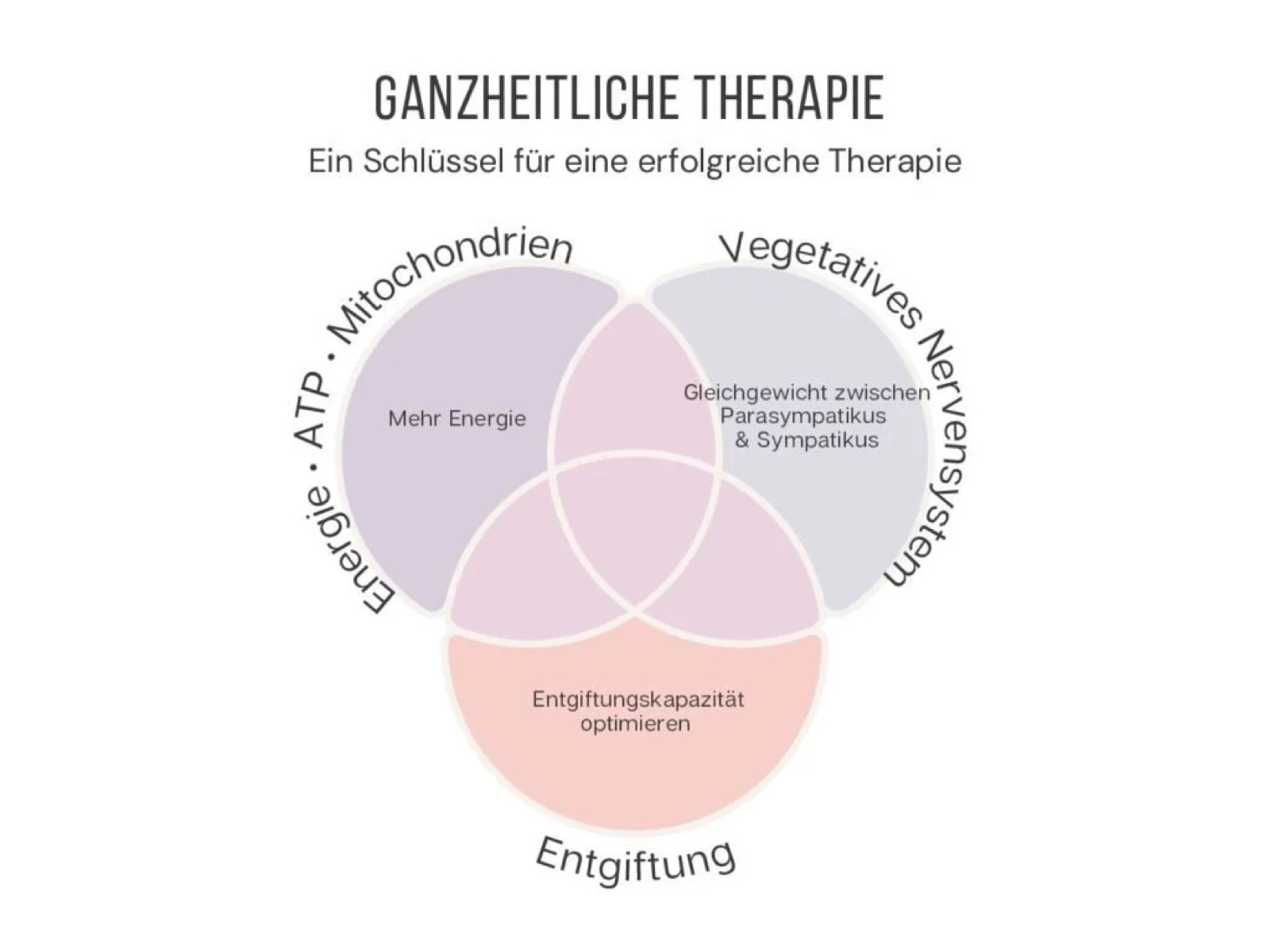
The concept of holistic medicine is based on 3 pillars, which are essential for building and maintaining a healthy organism and are interrelated.
According to this concept, if the mitochondria are not functioning optimally, this affects, for example, our body's detoxification capacity and our autonomic nervous system.
But too much stress can also throw the autonomic nervous system off balance – this leads to increased oxidative and nitrosative stress, and this time our mitochondria have trouble working properly.
However, if detoxification does not take place sufficiently because micro- and macronutrients are lacking, this in turn blocks the mitochondria and thereby creates stress in the autonomic nervous system.
• Energy and mitochondrial metabolism
Our metabolism needs a regular supply of nutrients, which we take in through food. The smallest functional units are the mitochondria, which are responsible for producing ATP – the cell's central energy carrier. Every one of our cells therefore depends on well-supplied mitochondria.
• Balance of the parasympathetic & sympathetic nervous systems
The parasympathetic nervous system is the part of our autonomic nervous system that is responsible for the body's regeneration and ability to rest. It initiates the building of energy reserves, stimulates metabolic processes and digestion, and ensures restful sleep. If our life is too full and accompanied by constant stress, the body unlearns how to switch from the activated sympathetic state to the parasympathetic state – sooner or later, this can lead to complaints and secondary diseases.
• The body's detoxification capacity
In naturopathy, great importance is attached to the body's detoxification capacity. Every day, the body produces its own metabolic and waste products, which are processed by the liver. In addition, we are exposed to many other foreign substances and pollutants (medications, environmental toxins, heavy metals), which our body tries to excrete.
According to this concept, all three pillars form the foundation of our (body) temple. The body depends on an adequate supply of minerals, vitamins, and trace elements in order to fulfill its functions.
In naturopathy, impaired mitochondrial function is associated with tiredness and exhaustion.
Effects on the immune, nervous, and hormonal systems are also described in this context. According to this view, the body regions mainly affected are those with a particularly high density of mitochondria:
Skeletal muscle cells
Sensory cells
Nerve cells
Heart muscle cells
Egg cells
Some important co-factors
Potassium
Potassium is involved in the formation of ATP and supports the transmission of signals in nerve and muscle cells. It is also essential for our heart function and blood pressure regulation. In addition, it affects the acid-base balance and stimulates the release of insulin, which in turn promotes the uptake of potassium into the cells.
Magnesium
Another important mineral is magnesium, which, in addition to forming ATP and participating in the signal transmission of nerve and muscle cells, above all regulates the influx of calcium into the cell. It is also responsible for the regulated signal transmission of neurotransmitters and hormones and stabilizes the cell membrane.
B vitamins
Vitamin B1 (thiamine) – contributes to the normal function of the nervous system and to energy metabolism from carbohydrates and proteins ("mood vitamin”)
Vitamin B2 (riboflavin) – involved in breaking down foreign substances, for example medications, as well as in the formation of vitamin B3, B6, folic acid, and vitamin K, and in immune defense processes
Vitamin B3 (niacin) – involved in fat metabolism and muscle energy metabolism as well as in the regulation of blood lipids (triglycerides and cholesterol)
Vitamin B5 (pantothenic acid) – involved in carbohydrate, protein, fat, and cholesterol metabolism
Vitamin B7 (biotin) – contributes to the maintenance of normal skin and hair and is essential for processes of carbohydrate, fat, and protein metabolism
Vitamin B9 (folic acid) – particularly important for pregnant women, as it is important for the production of genetic material and for the formation of red and white blood cells. It is a cell vitamin that is important for all growth processes involving cell division. Together with vitamin B12 and vitamin B6, it ensures the breakdown of homocysteine*
*An elevated homocysteine level in the blood increases the risk of cardiovascular diseases such as heart attack or stroke.
Vitamin B12 (cobalamin) – vital for body and mind. It is involved in DNA synthesis, cell division, and blood formation and is the only B vitamin that can be stored in the body, in the liver (hydroxocobalamin).
Vitamin C
Vitamin C is an antioxidant and contributes to the normal function of the immune system. It is involved in the formation of various hormones and neurotransmitters such as tryptophan, adrenaline, and cortisone. It is also involved in the regeneration of glutathione and is described in connection with histamine breakdown.
Amino acids
Amino acids are indispensable components of food that can be divided into essential and non-essential amino acids. This means there are amino acids that the body cannot produce itself and that must be supplied through food. We need them for many basic bodily functions, such as growth, building muscle and tissue, and various metabolic processes. In the liver, amino acids are either reassembled into proteins or channeled into metabolism, where they serve, for example, as a transport substance for fatty acids or as a messenger substance in the nervous or digestive system.
Glutathione
Glutathione is a "sulfur-containing tripeptide" and is formed from the amino acids glutamic acid, cysteine, and glycine. It is an antioxidant produced by the body that reacts with reactive oxygen compounds. It is involved in processes of the immune response and in the liver's detoxification processes. In naturopathy, it is often mentioned in connection with heavy metals.
Other articles you might be interested in:
If you would like to make an appointment or have any questions, please feel free to leave us a message.
We will get back to you as soon as possible.
Professionally responsible: Yesha Karmeli, naturopathic practitioner (Heilpraktiker), Natura Heilpraxis Berlin. This text provides general information and does not replace individual advice.