Natura
Late is common, a true night owl is rare
Many people see themselves as evening types. The research paints a different picture: genes shift the internal clock only slightly, while light, working hours and habits shift it by hours.
Harmony in rhythm: 8 – 8 – 8
A day has three equal parts. When none of them permanently crowds out the others, the body finds its rhythm.
- 8 hours of workMeaning, purpose and creative power: what we commit ourselves to.
- 8 hours of leisureEveryday recovery: social connection, exercise and taking care of yourself, such as meals, breaks and nature.
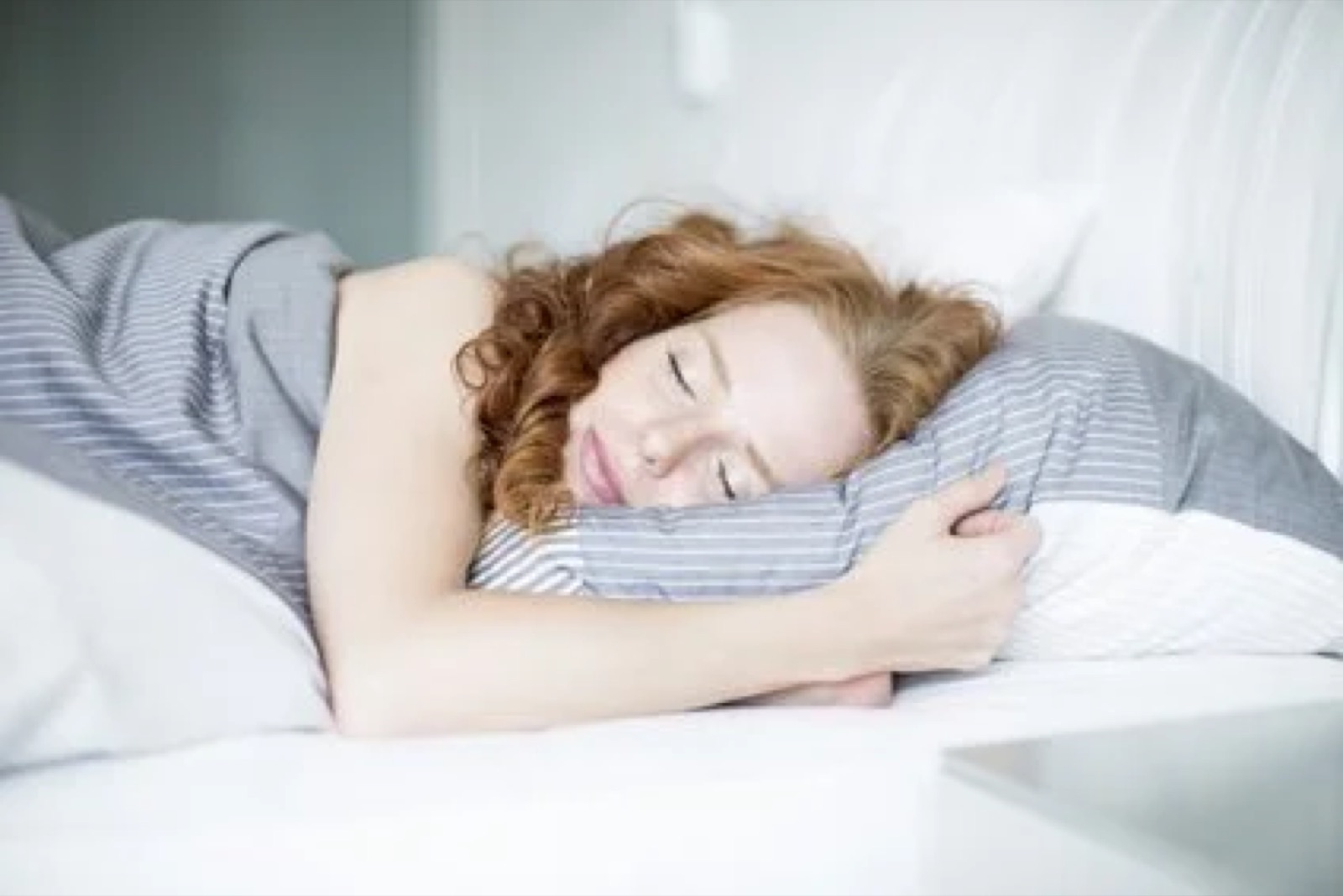
- 8 hours of sleepThe night belongs to recovery: melatonin rises, cortisol is at its lowest, the body repairs and restores.
Inward and outward: the rhythm of the soul
It is not only the body that lives in rhythms. Inner life also moves in two directions: outward, into the world, toward other people and into action, and inward, into retreat, reflection and processing. The terms for this, extroverted and introverted, were coined by the psychiatrist C. G. Jung. This is less about a personality type than about a movement every person makes every day.
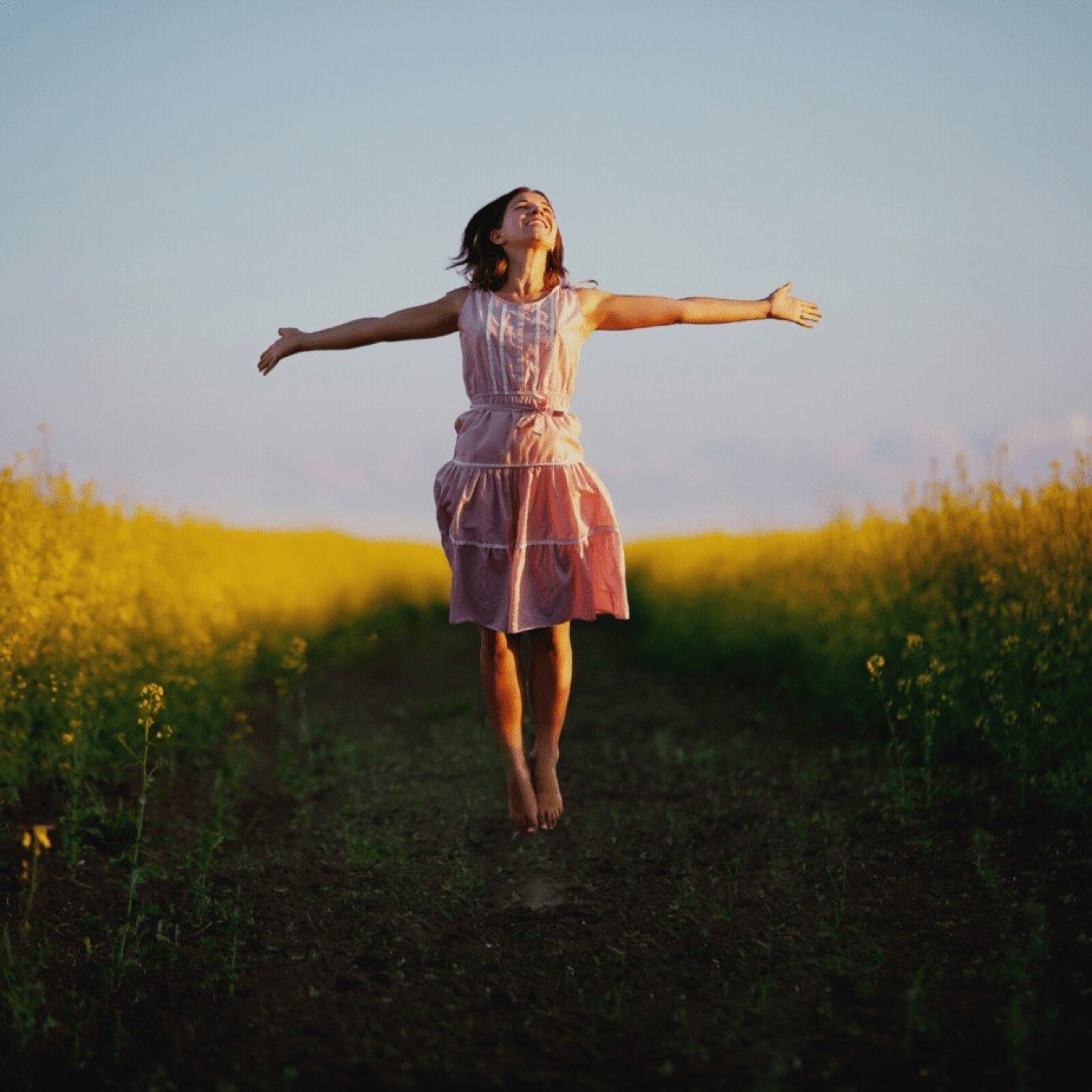
- Outward: day and summerEncounters, work, light and movement. Our forces flow out into the world.
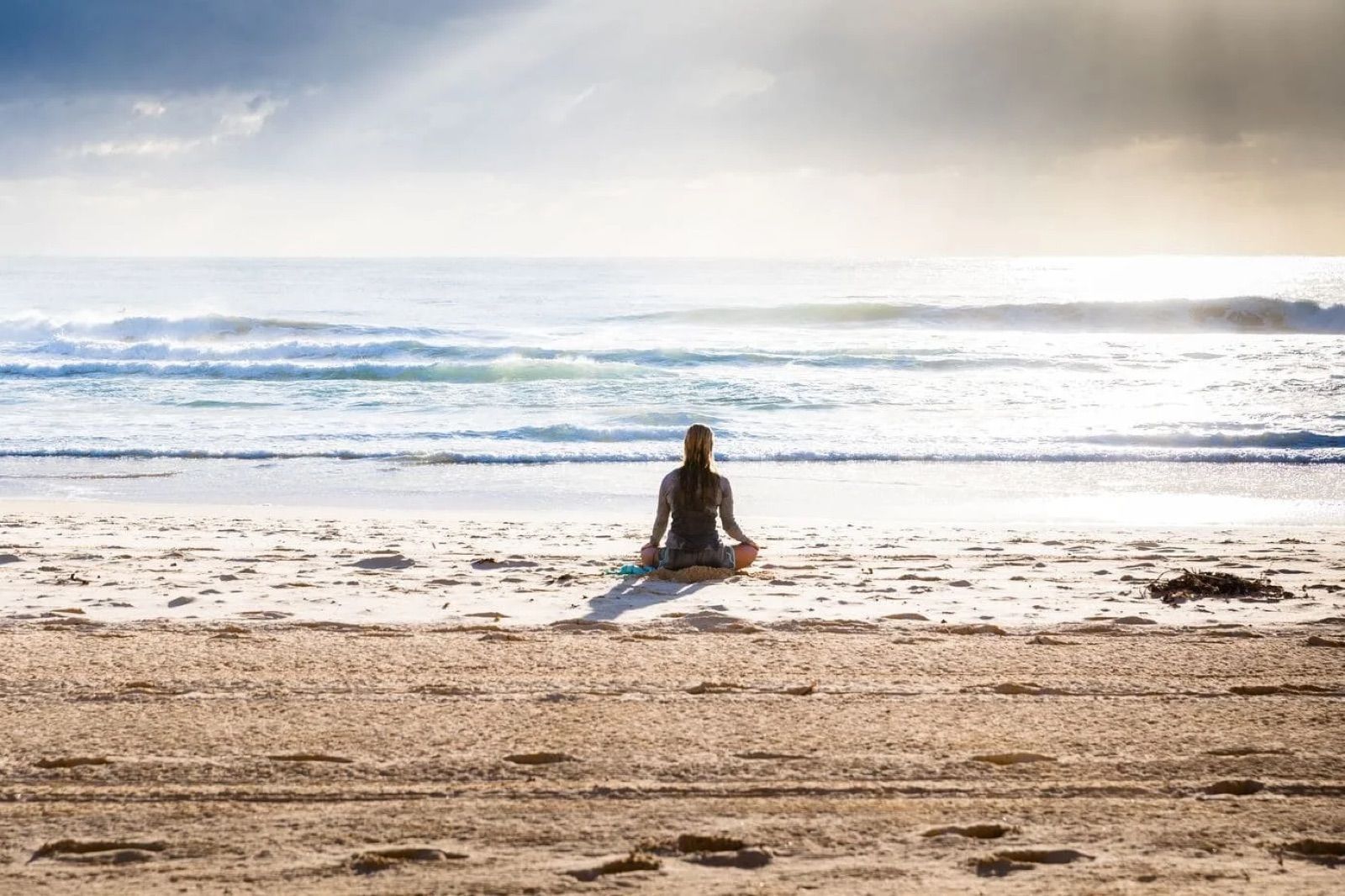
- Inward: night and winterRetreat, quiet, sleep and reflection. What we have experienced is processed and gathered.
- The center: the selfIt holds both movements together. Its image is warmth: being in touch with yourself and, from there, with others.
In this understanding, health does not mean always staying the same. It means being able to swing between both directions, just as day turns into night and summer into winter. If one direction dominates for a long time, for example always outward without retreat, or permanently withdrawn, the rhythm loses its center. In conversation, we look together at where you are right now and which steps suit you.
The image of inward, outward and center is an interpretive model from holistic medicine and psychology, not a measurable value. It complements the values we measure in the lab.
What happens in the body
Sleep and the daily rhythm depend on messenger substances that the body makes from the amino acid tryptophan. During the day serotonin is in the foreground, at night melatonin, the time signal of darkness. Its counterpart is cortisol: it rises in the morning and falls over the course of the day.
Recovery capacity and stress
Recovery capacity means that after a strain the body finds its way back to rest. During the day cortisol and adrenaline may rise; in the evening they should fall so that melatonin, serotonin and the calming nervous system (parasympathetic) can take over.
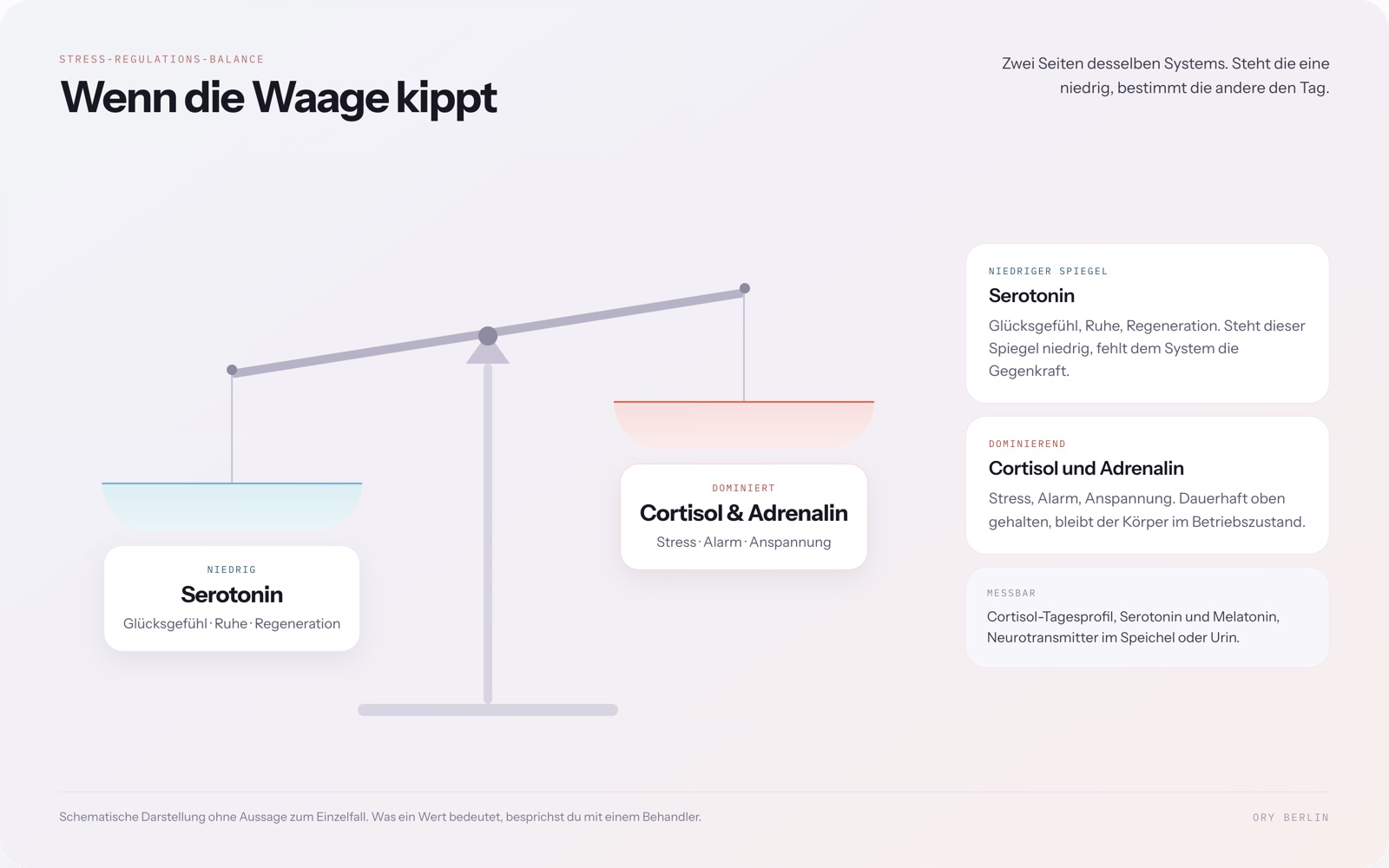
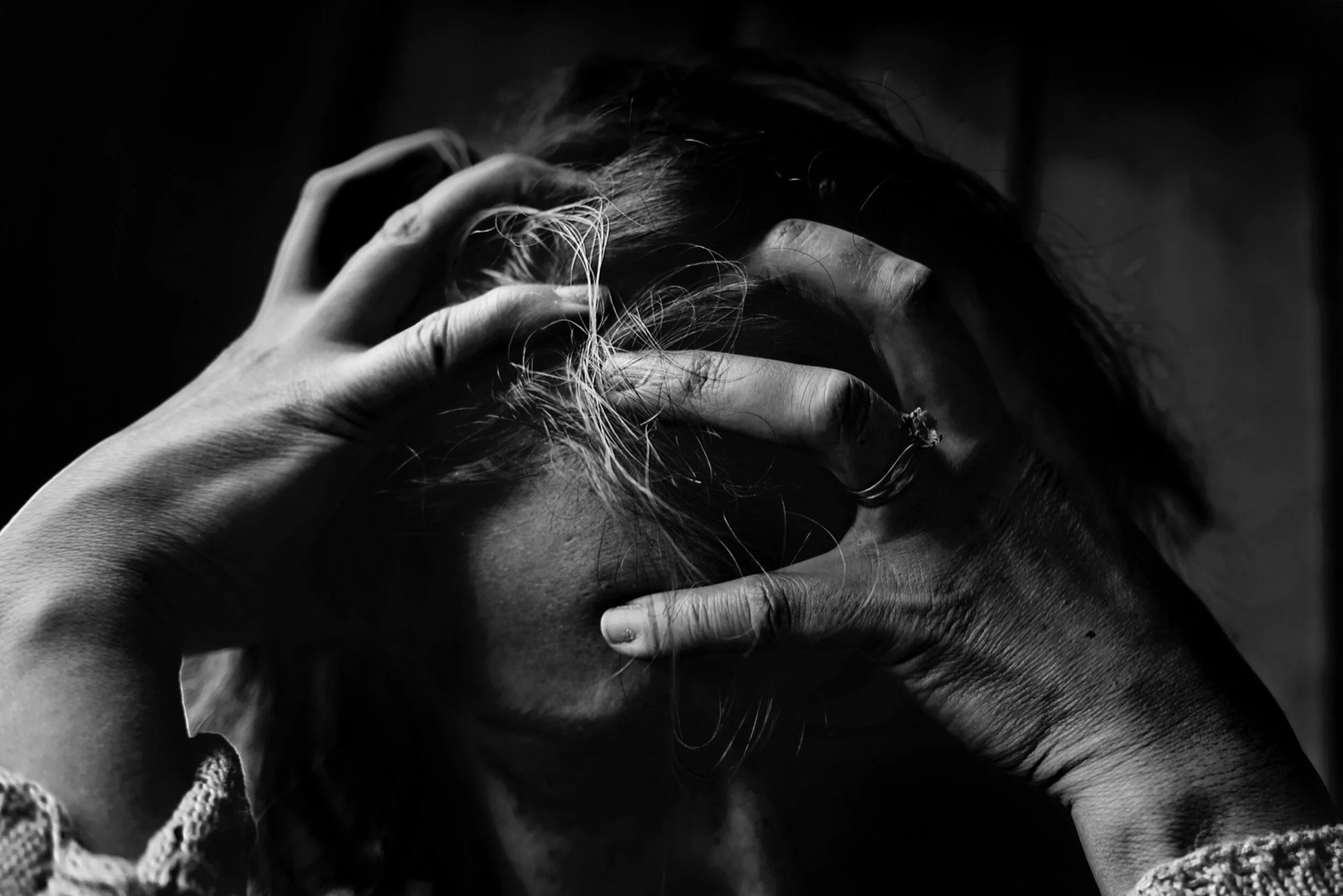
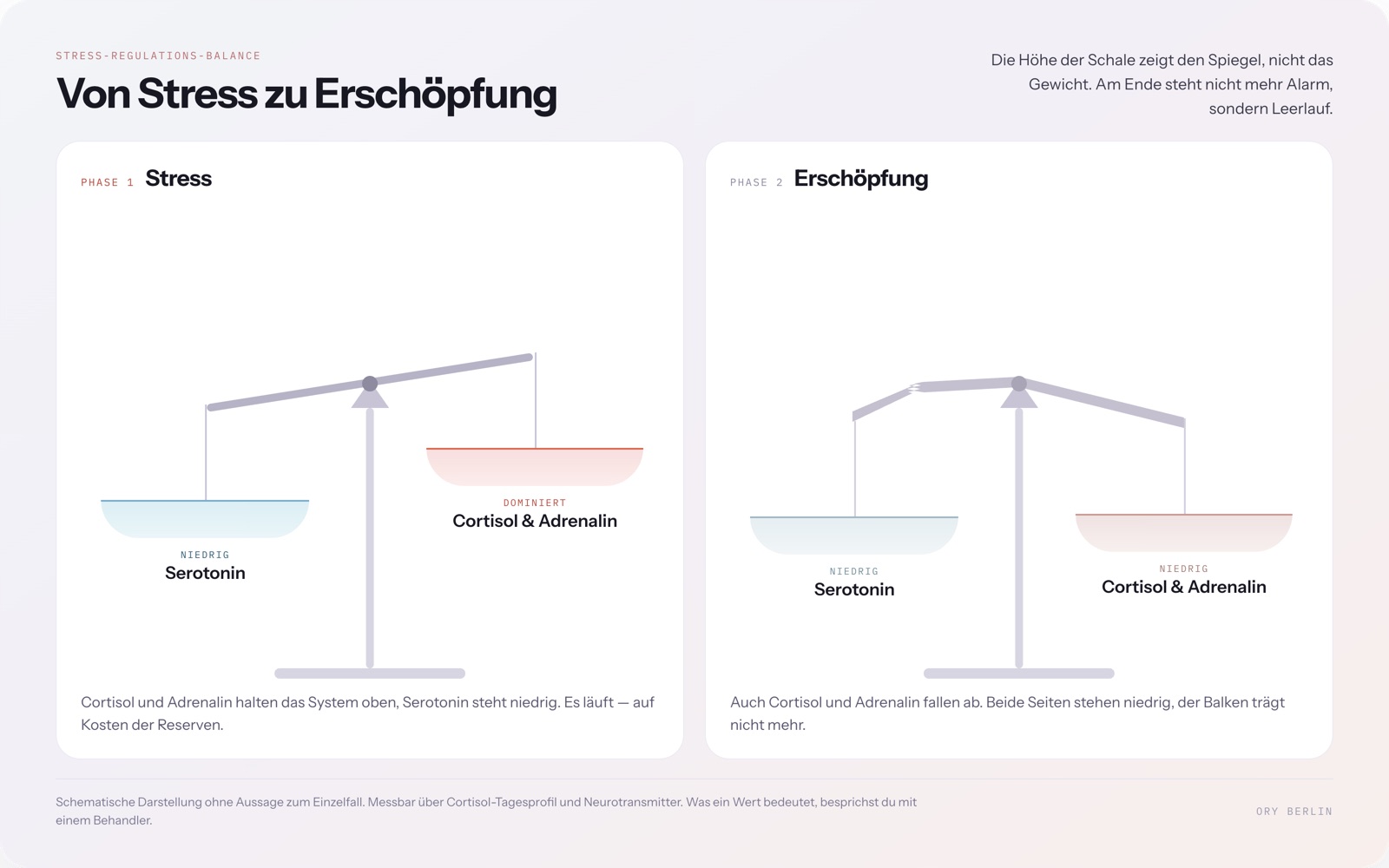
If stress persists, this interplay falls out of rhythm. Stress hormones stay too high in the evening or the daily curve flattens, and the sleep and relaxation hormones cannot unfold. Research associates chronic stress and disrupted daily rhythms with many chronic diseases. In the UK Biobank, the strongest association of the evening type was not metabolism but psychological distress (odds ratio 1.94). Observational data cannot separate cause and effect: strain shifts the rhythm, and a shifted rhythm increases strain.
Knutson & von Schantz 2018, Chronobiol Int 35:1045 (433,268 adults)
What can be measured
Whether a rhythm is shifted or flattened can be read from measurements. You order the tests for home use from ORY Diagnostics; we can discuss the results with you at the practice.
Note: the cortisol day profile shows the course over the day, flat or shifted. It does not measure the awakening response in the first half hour.
What we do at the practice
- Consultation including your life story: we work out whether a late internal clock is behind it or whether daily life and strain push sleep later. These are two different starting points.
- Rhythm plan: set times for morning light, meals, exercise and caffeine, the same building blocks used in the studies.
- Coaching: when late evening is the only time that feels like your own and going to bed keeps getting postponed.
- Follow-up after the lab: we discuss your results and, where useful, nutrient topics.
Persistent sleep problems, breathing pauses at night or severe daytime sleepiness need to be assessed by a doctor. Our support does not replace a medical diagnosis.
Further reading: A plan for healthy daily rhythms, Sleep problems, nervousness and inner restlessness, The role of the parasympathetic nervous system in recovery and Exhaustion, burnout and energy.
Frequently asked questions
Am I really an evening type?
Probably less than you think. Genetic differences shift sleep by minutes up to about an hour; evening light, working hours and habits shift it by hours. If you are not tired in the evening, a late internal clock is more likely; if you are tired and still stay up, it is more likely a daily-life issue.
How are serotonin and melatonin connected?
Melatonin is made at night in the pineal gland from serotonin, which in turn comes from the amino acid tryptophan. Evening light slows this last step.
Which test makes sense to start with?
We discuss this in the first consultation. Often the cortisol day profile (€155) and the melatonin test (€55) are the first measurements, both as saliva tests at home.
Does this replace an assessment in a sleep lab?
No. If sleep apnea is suspected, or with breathing pauses or severe daytime sleepiness, a medical assessment is needed.
Professionally responsible: Yesha Karmeli, naturopathic practitioner (Heilpraktiker), Natura Heilpraxis Berlin. This text provides general information and does not replace individual advice.