Natura
Why vitamin C is so important
Vitamin C is the most important water-soluble antioxidant and is found in all cells, in body fluids, and in the blood. There it is itself oxidized (and thereby used up) in order to protect cells and tissue from oxidation by free radicals. It also protects vitamins E, A, and folic acid, as well as vitamins B1, B2, and pantothenic acid, from oxidation and keeps them in their active form. Vitamin C is also indispensable in converting copper into a component of the antioxidant enzyme superoxide dismutase.
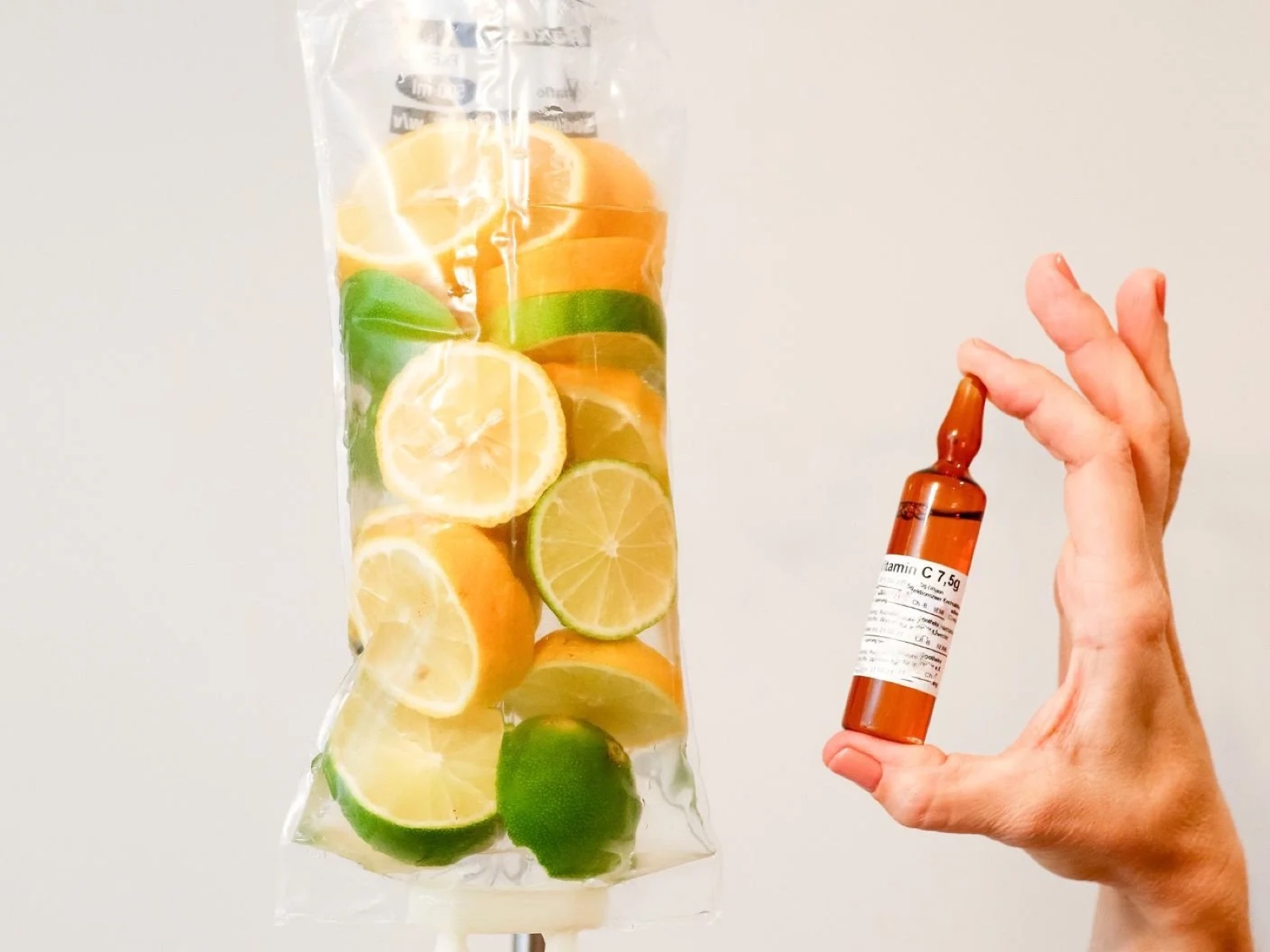
Vitamin C infusion / high-dose vitamin C infusion
possible dosage
7.5 g high-dose vitamin C infusion- 14 g high-dose vitamin C infusion- 21.5 g high-dose vitamin C infusion(higher doses possible in special cases)The dose is determined individually and combined with other minerals, trace elements, and vitamins.
Vitamin C, also known as ascorbic acid, is considered one of the oldest and best-researched vitamins in the world. It is involved in a wide range of bodily functions and is indispensable for the organism.
The history of vitamin C
Throughout human history, diseases such as rickets, pellagra, beriberi, pernicious anemia, and the like caused much suffering and an enormous number of deaths.
Vitamin deficiency
Chief among them as a cause of death was scurvy. Scurvy is the classic vitamin deficiency disease, which was particularly widespread among seafarers. The cause of this disease was the one-sided diet of the sailors. It consisted mainly of salted meat and dry hardtack and contained little to no fresh fruit and vegetables. Due to the lack of nutrients, those affected lost the energy and physical strength the organism needs after some time. Their muscles began to waste away, and pain occurred in some places, accompanied by internal bleeding. Severe depression, total exhaustion, ulcers, and diarrhea burdened the body, damaged it massively, and within a short period led to failure of the lungs, kidneys, and heart.On the voyage of discovery of the Portuguese navigator Vasco da Gama in 1497, which stretched from Lisbon to India and lasted almost a year, around 100 of his 160 sailors died of the vitamin deficiency disease, for example.Even at that time, people suspected that the disease might have something to do with diet. However, due to a lack of scientific knowledge, this could not be proven.
Vitamin C and scurvy
In 1747, the English ship's surgeon James Lind conducted several experiments on scurvy patients. The participants received the same food for days, with the exception of 2 people, who additionally received two oranges and a lemon every day. After one week, the two patients with the citrus fruits were the only ones who had recovered. Following Lind's discovery, the chemist Sylvester Solomon Zilva isolated vitamin C from lemons in 1920. A few years later, the biochemist Albert Szent-Györgyi also obtained isolated vitamin C, but unlike Zilva, from peppers and cabbage. Szent-Györgyi gave the substance the name a-scorbic acid (acid against scurvy). In his numerous studies, he was able to identify connections between the oxidation of nutrients and energy production. A few years later, these findings helped the two chemists Tadeusz Reichstein and Anton Grüssner to produce vitamin C artificially from glucose through a microbial, biotechnological oxidation reaction. This process still serves as the basis for industrial production today. Szent-Györgyi received the Nobel Prize in Medicine for his research in 1937.
The functions of vitamin C
Vitamin C is known as a multifunctional vitamin. It is an antioxidant that reacts with free radicals, which are produced as a waste product of human metabolism. These are highly reactive, aggressive chemical oxygen molecules or organic compounds. These organic compounds contain oxygen, such as superoxide, hyperoxide, hydroxyl, and many more.Vitamin C contributes to the protection of cells from oxidative stress; in doing so, it works together with trace elements such as selenium, zinc, or manganese. Vitamin C also contributes to normal collagen formation - collagen is a building material produced by the body for connective tissue and blood vessels. Vitamin C also increases iron absorption. Furthermore, vitamin C is involved in the formation of various hormones and messenger substances.
Who hasn't reached for vitamin C when they had a cold?
Vitamin C contributes to the normal function of the immune system. Vitamin C is also frequently mentioned in connection with male fertility.
Vitamin C requirements
Many people today pay too little attention to a balanced diet with the necessary micronutrients. Pregnant women, breastfeeding women, and smokers in particular have a higher vitamin C requirement. For babies and toddlers, too, an adequate nutrient supply is important for growth and bone formation.
Foods with a high vitamin C content
Bell peppers: No matter whether yellow, green, or red. Bell peppers are a valuable source of vitamin C, but not everyone tolerates them well.
Citrus fruits: Freshly squeezed orange, lemon, and grapefruit juices are an ideal energy kick for the day!
Acerola cherry: The peoples of the Maya culture already valued these small fruits highly. Today, the acerola cherry is one of the best sources of vitamin C in the world.
Sea buckthorn: In this country, often made into jam or stirred into numerous dishes, the small orange-yellow berries provide even more vitamin C than lemons.
Kale: In addition to plenty of iron, calcium, and vitamin K, this incredibly healthy and highly alkaline vegetable also contains vitamin C, which develops through gentle heating during preparation.
Broccoli: A vitamin and mineral powerhouse for your body! Also known for its low calorie count and as a valuable source of iodine.
What to do if you suspect a vitamin C deficiency?
First of all, a balanced diet with plenty of fresh fruit and vegetables is important. It should be kept in mind that every person is individual, including when it comes to diet, and that not everyone tolerates everything well.If you feel tired and run-down over a longer period, have the cause clarified by a physician. You are also welcome to seek advice at our practice.
What can we do for you?
At Natura Heilpraxis, you can make an appointment for infusion therapy.Together with you, we use a kinesiological test and, if necessary, professional laboratory diagnostics (whole blood mineral analysis / organic acids analysis / mitochondrial activity) to discuss which vitamins, trace elements, minerals, etc. may be considered for you.We then put together an infusion for you. The substances are administered directly into the bloodstream.Infusion therapy is part of our holistic therapy concept. Before each infusion, we discuss the procedure and possible side effects with you.
Professionally responsible: Yesha Karmeli, naturopathic practitioner (Heilpraktiker), Natura Heilpraxis Berlin. This text provides general information and does not replace individual advice.