Natura
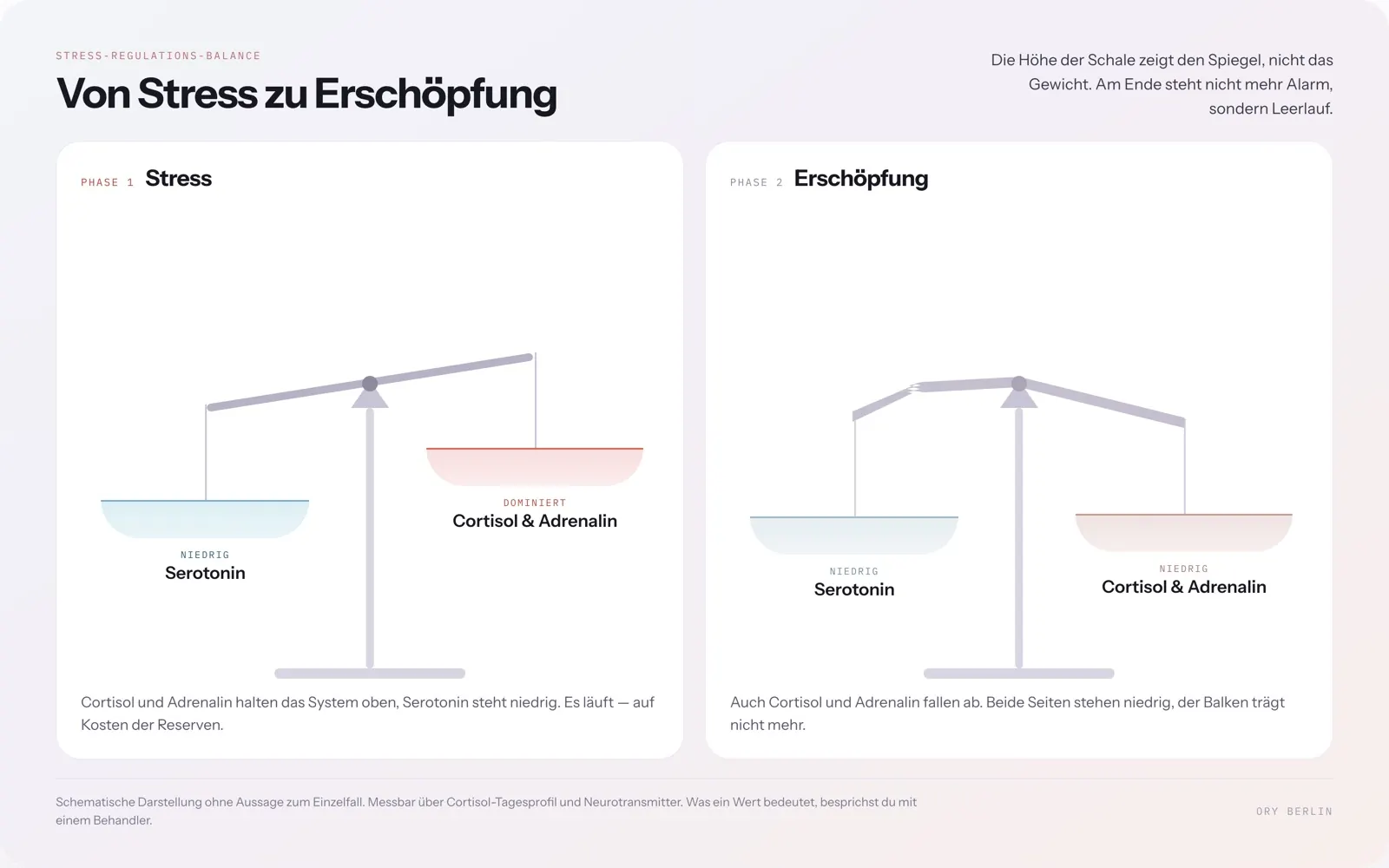
Stress is first of all a sensible mechanism: it puts the body into performance mode. It becomes a problem when the tension no longer subsides. Then it is worth looking at what happens in the body and what can be influenced.
The stress axis in brief
Under strain the brain activates a chain: hypothalamus, pituitary gland and adrenal cortex. At the end, cortisol, among other things, is released. It provides energy, influences blood sugar and blood pressure and dampens inflammatory responses. In parallel the sympathetic nervous system works (adrenaline, palpitations).
Cortisol has a daily rhythm
The level is normally highest shortly after waking and falls over the day. In the evening it is low, which makes falling asleep easier. Chronic stress, shift work, lack of sleep or late light in the evening can shift this rhythm. More on Sleep & Rhythm.
How chronic stress can show
- trouble falling or staying asleep, waking in the early morning hours (sleep disorders)
- digestive complaints, symptoms resembling irritable bowel
- neck and jaw tension, headaches
- palpitations, inner restlessness
- declining concentration and resilience, irritability
- feeling exhausted despite breaks (cause: stress)
The signs are nonspecific and can also point to other causes, such as the thyroid or depression. A medical evaluation is part of it.
What can be measured and what cannot
- Blood: cortisol in the morning, ordered by a doctor, for example when an adrenal disease is suspected.
- Saliva: day profile with several samples. Widespread in functional medicine, but its informative value is not undisputed.
- Urine and hair: occasionally used; interpretation is complex.
Important context: “adrenal weakness” or “adrenal fatigue” is not a recognized diagnosis. Genuine adrenal diseases such as Addison's disease are rare, clearly defined and belong in medical treatment. We therefore do not sell a cortisol diagnosis but interpret measured values as one piece of information among several.
What works in daily life
- fixed wake-up and bedtimes, daylight in the first hour after getting up
- exercise you enjoy, ideally outdoors
- breaks during the day, a conscious evening routine without screens
- limit caffeine early in the day, alcohol sparingly
- breathing and relaxation exercises (parasympathetic nervous system)
- conversations and support when strains in daily life seem unsolvable
When help is important
Seek medical or psychotherapeutic help if you hardly sleep for weeks, have panic attacks, are persistently low or have thoughts of harming yourself. In emergencies you can reach the German crisis line (Telefonseelsorge) at 0800 111 0 111 (free of charge, around the clock, in German).
Support at Natura Heilpraxis
We look at strain, rhythm and body together: in the medical history, with laboratory diagnostics if needed, in mental coaching and with the Nullpunkt method, which leads step by step from constant tension to recovery. This is a complement and no substitute for medical or psychotherapeutic treatment.
Frequently asked questions
What does cortisol do in the body?
Cortisol is produced in the adrenal cortex and influences blood sugar, blood pressure, inflammatory responses and alertness. The level is highest in the morning after waking up and falls over the course of the day.
Can cortisol be measured?
Yes, in blood (usually in the morning), in saliva as a day profile, in urine or in hair. Informative value varies, and single values depend strongly on time of day, sleep and stress. Interpretation belongs in experienced hands.
Is there such a thing as “adrenal fatigue”?
“Adrenal fatigue” is not recognized as a diagnosis by endocrinology societies. By contrast, genuine adrenal diseases such as Addison's disease are rare but clearly defined medically and need medical treatment.
What helps against chronic stress in daily life?
Regular sleep, daylight in the morning, exercise, breaks, breathing exercises, limiting caffeine and alcohol, and social contacts are among the measures that play a role in studies. With persistent strain, professional support makes sense.
All questions & answers in the guide →
Professionally responsible: Yesha Karmeli, naturopathic practitioner (Heilpraktiker), Natura Heilpraxis Berlin. This text provides general information and does not replace individual advice.