Natura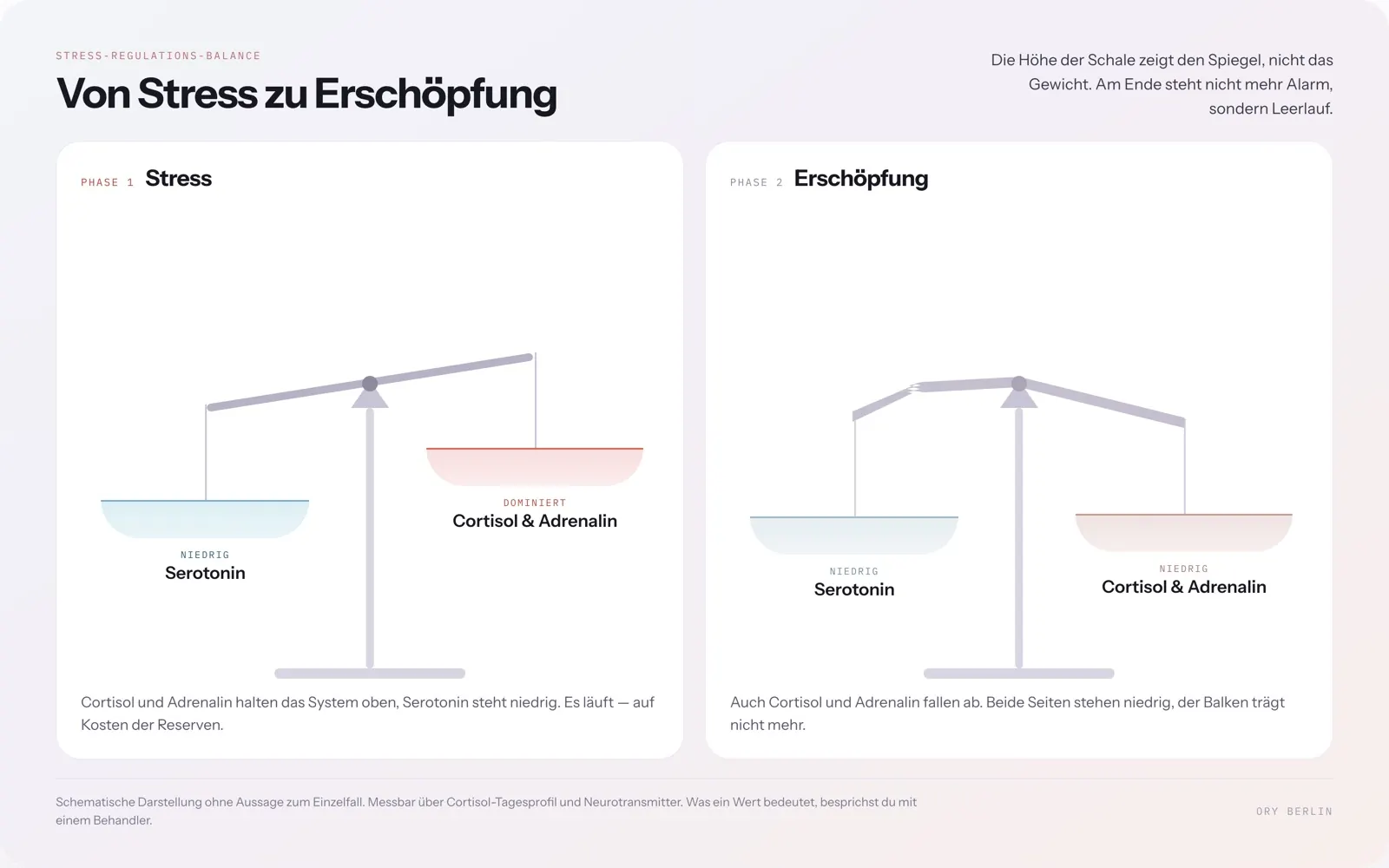
Tired, listless, quickly exhausted – many people know this, and for some it has become a permanent state. The honest answer to “What is the cause?” is: rarely just one thing. Exhaustion is a symptom behind which very different things can stand.
Possible influencing factors
- Sleep and rhythm: too little, too irregular or not restorative, for example with breathing pauses at night (sleep apnea).
- Chronic stress: physical and emotional. Those who stay “under pressure” for a long time often notice the effects only later. More in our article on burnout and on the page Exhaustion, Burnout & Energy.
- Lab values: for example iron stores (ferritin), vitamin B12, vitamin D, thyroid hormones, blood sugar.
- Infections and inflammatory processes: exhaustion can linger long after an infection has passed.
- Medication: some drugs can cause tiredness as a side effect or affect the nutrient balance.
- Emotional strain: low mood and exhaustion often go hand in hand and, if suspected, belong in professional hands.
What do mitochondria have to do with it?
Mitochondria work in almost every body cell. They convert nutrients and oxygen into ATP, the universal energy carrier of the cell. Many of them sit in cells with a high energy demand: muscles, nerves, heart and brain.
This process needs building blocks and helpers, among them B vitamins, magnesium, iron, coenzyme Q10 and carnitine. If they are missing, or if the metabolism is under sustained strain, this can affect energy metabolism. Functional medicine therefore asks why someone is tired, not only whether they are. We describe this in more detail in our articles on mitochondrial medicine and mitochondrial medicine in orthomolecular practice.
Important context: an inherited, proven mitochondrial disease is a rare condition diagnosed in specialized medical centers. In naturopathy the term “mitochondrial medicine” is used more broadly and describes looking at influences on energy metabolism. The two are not the same.
What you can observe yourself
- At what time of day is the tiredness strongest: in the morning, in the afternoon, after eating?
- How do you fall asleep and stay asleep, and do you feel rested in the morning?
- Is there a trigger, such as an infection, a period of heavy strain, a new medication?
- Does your condition worsen markedly after physical or mental effort, and does that last for days? You should raise this with your doctor.
When a medical check-up is important
Please seek medical advice promptly for unintended weight loss, fever, night sweats, shortness of breath, chest pain, new paralysis or visual disturbances, persistent low mood or thoughts of harming yourself. Exhaustion alone should never be a reason to ignore these signs.
How we proceed at Natura Heilpraxis
It starts with a detailed conversation about your history, daily life, sleep, diet and strains. Depending on the situation, functional laboratory diagnostics are added. The values are interpreted together; our page Understanding Biomarkers shows how you can read your values. For people who want to find their way from constant tension back into a rhythm, the Nullpunkt method describes our step-by-step path. The discussion does not replace medical diagnostics.
Frequently asked questions
How long is tiredness normal before I should have it checked?
If exhaustion lasts longer than two to three weeks despite enough sleep, or limits your daily life, a check-up makes sense. With warning signs such as unintended weight loss, fever, night sweats or shortness of breath it should happen promptly.
What are mitochondria?
Mitochondria are cell components in which the energy carrier ATP is produced from nutrients and oxygen. They are therefore often called the power plants of the cell. The process needs, among other things, B vitamins, magnesium, iron and coenzyme Q10.
Can a naturopathic practitioner diagnose a mitochondrial disease?
Inherited mitochondrial diseases are rare and are diagnosed in specialized medical centers. In functional medicine the term is sometimes used more broadly and refers to influences on energy metabolism. The two should not be confused.
Does a functional work-up replace a visit to the doctor?
No. It complements medical diagnostics. Organic causes such as anemia, thyroid disease, diabetes or depression belong in medical hands.
All questions & answers in the guide →
Professionally responsible: Yesha Karmeli, naturopathic practitioner (Heilpraktiker), Natura Heilpraxis Berlin. This text provides general information and does not replace individual advice.