Natura
Can stress lead to burnout?
Always wanting more and doing what you don’t like to do leads to stress and burnout.Stress is always linked to your own experience. On a physical level, stress becomes tangible through the effect of stress hormones. In dangerous situations, the pituitary gland (the central hormonal control organ in the brain) signals the subordinate hormone glands – the adrenal glands – to release stress hormones (adrenaline, noradrenaline and cortisol) so that the body has enough strength and energy to deal with the situation experienced as challenging or even dangerous. Physical and emotional stress leads to increased formation of pro-inflammatory cytokines in the body, such as IL-6, TNF-α and IFN-γ. The latter in particular stimulates the enzyme indoleamine 2,3-dioxygenase (IDO), which catalyzes the conversion of tryptophan into kynurenine, a non-proteinogenic amino acid that leads to inhibition of the cellular immune response. This conversion can consume more than 95% of the available tryptophan. Less than 5% then remains for serotonin synthesis. A deficiency is inevitable. Serotonin deficiency in turn means a deficiency of melatonin, which is important for healthy and restful sleep. Serotonin is known to us as the happiness hormone. A serotonin deficiency can therefore lead to a tendency toward depressive moods and sleep disorders.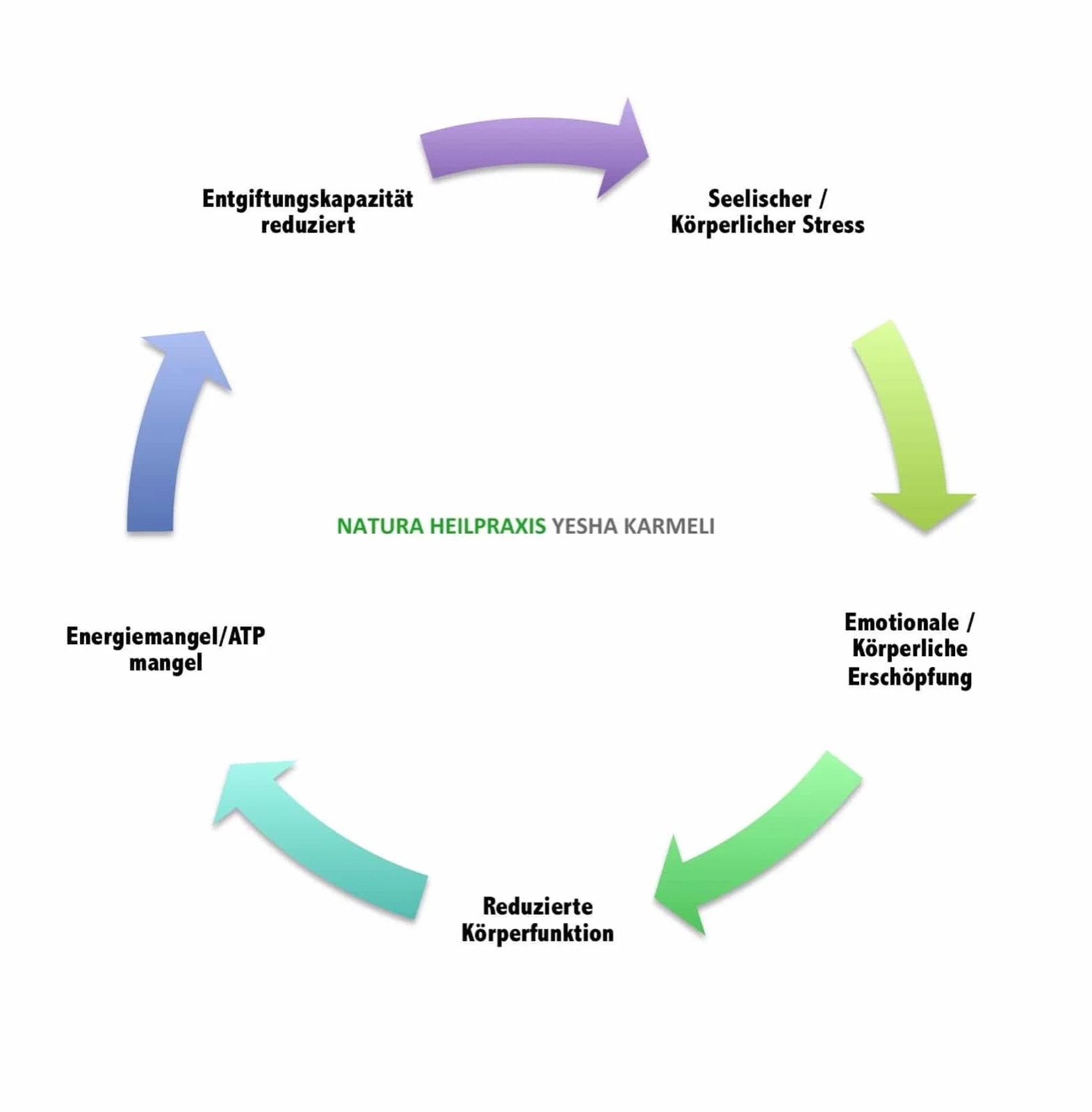
Warning signs and health consequences of stress
- Body region & possible diseases
- Brain Reduced performance, cerebral infarction
- Psychological States of restlessness and sleep disorders
- Cardiovascular system High blood pressure, heart attack, circulatory disorders
- Muscles Headaches and back pain, impaired muscle control
- Digestive organs Gastrointestinal ulcers, inflammation of the intestinal mucosa – leaky gut syndrome
- Metabolic organs Diabetes, elevated cholesterol levels, weakened liver metabolism, reduced detoxification capacity
- Immune system Infectious diseases, unfavorable course of tumor diseases, among others
- Sensory organs Tinnitus, sudden hearing loss, ringing in the ears
- Reproductive organs Menstrual cycle disorders, infertility, impotence
- Pain receptors Reduced pain tolerance
Chronic stress can also lead to disturbances of psychological well-being, which often develop before physical impairments. One possible psychological consequence is so-called “burnout syndrome”, a persistent and severe state of exhaustion with physical and psychological complaints.
Do you have questions about stress and exhaustion? Contact us!
Further articles on this topic:
Sleep disorders, nervousness and inner restlessnessPremenstrual syndrome (PMS)Holistic therapyNitrosative stress
Professionally responsible: Yesha Karmeli, naturopathic practitioner (Heilpraktiker), Natura Heilpraxis Berlin. This text provides general information and does not replace individual advice.