Natura
Burnout is often misunderstood as a sign of weakness. In fact, it frequently affects committed people who have given more for a long time than they got back. It is worth looking more closely: What happens in the body, what in the work environment, and what inside yourself?
What burnout means
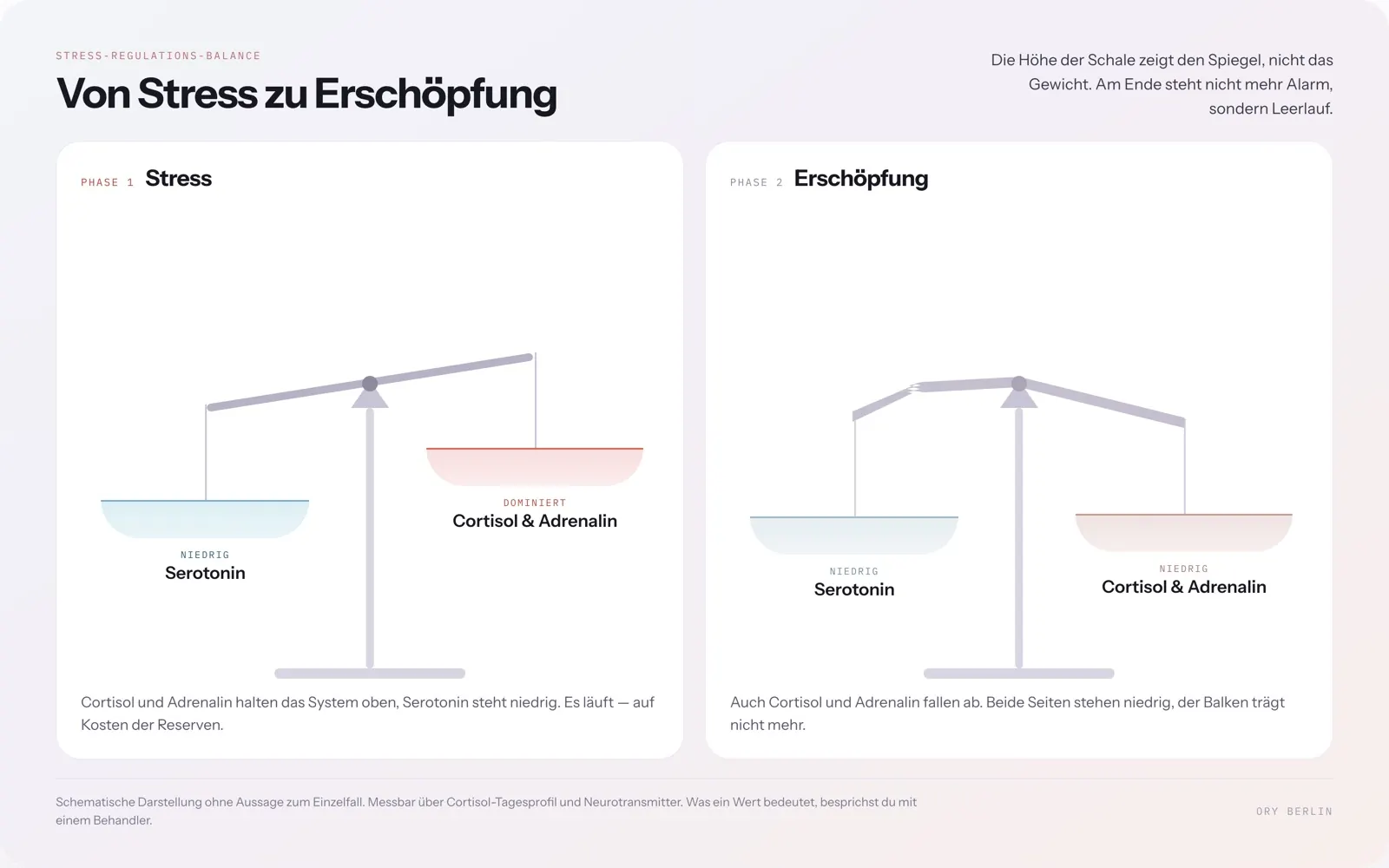
The World Health Organization describes burnout in the ICD-11 as a syndrome resulting from lasting, unmanaged stress at work. Three features belong to it: pronounced exhaustion, inner distance or cynicism toward work and the feeling of no longer being effective. Burnout is thus a condition related to work, not a diagnosis of its own. What the body experiences in the process is described in the article Stress and cortisol.
What can come together at work
- Too much work in too little time, without recovery in between.
- Little influence on how and when work is done.
- Too little recognition, financial or personal.
- Lack of community and conflicts in the team.
- Perceived unfairness in decisions and promotions.
- Conflict of values: every day you do something that does not fit what matters to you.
Often it is not a single point but an interplay. More on the causes in the article Burnout cause: stress and on the page Exhaustion, burnout & energy.
Early signs
- Sunday-evening tension and brooding about work
- Trouble falling or staying asleep
- Irritability, a feeling of emptiness or indifference
- more frequent infections, tension, digestive complaints
- withdrawal from friends and hobbies
- problems with concentration and memory
These signs are non-specific. Thyroid disease, iron deficiency, sleep apnea or depression can look similar. A physical evaluation is therefore part of the process (Tired despite sleep: checking lab values).
The way back: recovery and clarity
- Recovery first: sleep, breaks, exercise outdoors, less alcohol and caffeine. Without this foundation the rest does not land.
- Name the strain: What exactly drains you? Tasks, people, conditions, your own demands?
- Seek conversation: with supervisors, occupational physician, works council or HR if the work itself can be changed.
- Clarify values: What matters to me, what gives me meaning, where do I want to go? Not every way back leads to the same role.
- Understand your own patterns: perfectionism, difficulty saying no or seeking recognition through performance.
When help is important
Seek medical or psychotherapeutic help if you hardly sleep for weeks, have panic attacks, are persistently low or have thoughts of harming yourself. In emergencies you can reach the telephone counseling service at 0800 111 0 111 (free of charge, around the clock) or the emergency number 112.
Support at Natura Heilpraxis
In mental coaching and with the Zero Point Method we support people in moving from constant tension into recovery and in clarifying their own path. If needed, we look at the body with laboratory diagnostics. This is a complement and not a substitute for medical or psychotherapeutic treatment.
Frequently asked questions
How do I recognize burnout?
The WHO describes three features: a feeling of exhaustion, growing inner distance or cynicism toward work and reduced professional effectiveness. Common additions are sleep problems, irritability, tension, digestive complaints and withdrawal from private life.
What is the difference between burnout and depression?
Burnout is related to the work situation. Depression affects all areas of life and is an illness that needs treatment. The boundaries can be fluid, and both can exist at the same time. Professional evaluation is therefore important.
Which workplace factors play a role?
Burnout research describes six areas: workload, lack of control over your own work, too little recognition or pay, lack of community, perceived unfairness and a conflict between your own values and those of the organization.
What can I do myself?
Take recovery seriously, secure sleep and exercise, set breaks and boundaries, address strain openly and seek support. In the longer term, it is worth asking what gives you meaning at work and what no longer fits you.
When should I see a doctor?
If you hardly sleep for weeks, feel persistently low, have panic attacks, physical complaints increase or you have thoughts of harming yourself. Then treatment belongs in medical or psychotherapeutic hands.
All questions & answers in the guide →
Professionally responsible: Yesha Karmeli, naturopathic practitioner (Heilpraktiker), Natura Heilpraxis Berlin. This text provides general information and does not replace individual advice.