Natura
Constipation (obstipation) - A holistic perspective
The following notes are general, non-binding information. They do not replace individual medical advice. Nor can they replace treatment by a physician, psychotherapist or physiotherapist. We consider the services of physicians, psychotherapists and physiotherapists to be very important. Ongoing treatment should therefore not be interrupted or discontinued, and treatment that becomes necessary in the future should not be postponed. No promises are made that a cure or success will occur.
What does obstipation mean?
The term obstipation is used to describe bowel movements that are altered or perceived as difficult. Aspects such as stool frequency, stool consistency or the subjective feeling of incomplete emptying can play a role.
How it is perceived and how pronounced it is varies from person to person, and it can occur temporarily or over a longer period.
Possible connections in constipation
From a holistic perspective, various influencing factors are discussed in connection with altered bowel activity. These are not considered in isolation but in connection with lifestyle, diet, everyday situation and individual stresses.
The specialist literature distinguishes between functional and secondary forms. These classifications serve to describe possible connections and do not constitute a diagnosis.
Functional classifications
In functional forms, aspects such as individual bowel motility or the interaction between muscles and the nervous system are in the foreground. These connections are being studied scientifically but have not been clarified in every detail.
Secondary influences (examples)
Holistic models address the following factors, among others:
Eating habits
Fluid intake
Amount of everyday physical activity
psychological stress
Everyday stress
Taking certain medications
individual life circumstances
These aspects can be relevant to different degrees depending on the person.
Medications and altered digestion
Product information points out that various medications can be associated with changes in digestion as a possible side effect. These include medicines from the following areas, among others:
diuretic medications
Painkillers
Blood pressure medications
Psychotropic drugs
Iron-containing preparations
The type and extent of such effects vary from person to person and depend on the active ingredient, dosage and personal situation. Medications may only be changed or adjusted in consultation with the treating physician.
Overview: medications and possible side effects
The points listed below are not a complete list and serve solely as general information.
In addition to changes in digestion, other undesirable effects may occur, which are described in the respective product information.
Product information describes that certain medications can be associated with changes in digestion in some individuals. The type and extent vary from person to person and are not predictable.
Diuretic medications (diuretics)
Can be associated with changes in fluid balance and digestion.
Opioid painkillers
Are used in medical care and are known to be able to influence bowel motility.
Blood pressure medications
Some active ingredients in this group are also mentioned in product information in connection with changes in bowel habits.
Antidepressants
Medicines in this area can have various effects on the autonomic nervous system, which is also involved in digestive processes.
Iron-containing preparations
Are used frequently and can be accompanied by changes in stool consistency or color in some people.
Important note: Medications may only be changed or adjusted after consulting a physician.
Stress, psyche and the bowel – a holistic view
Many holistic approaches discuss a connection between psychological stress, the way stress is processed and digestive functions. The focus is not on a cause-and-effect statement but on viewing the human being as a unity of physical and emotional aspects.
The interactions between the nervous system, digestion and emotional experience are the subject of current research and are taken up conceptually in naturopathy.
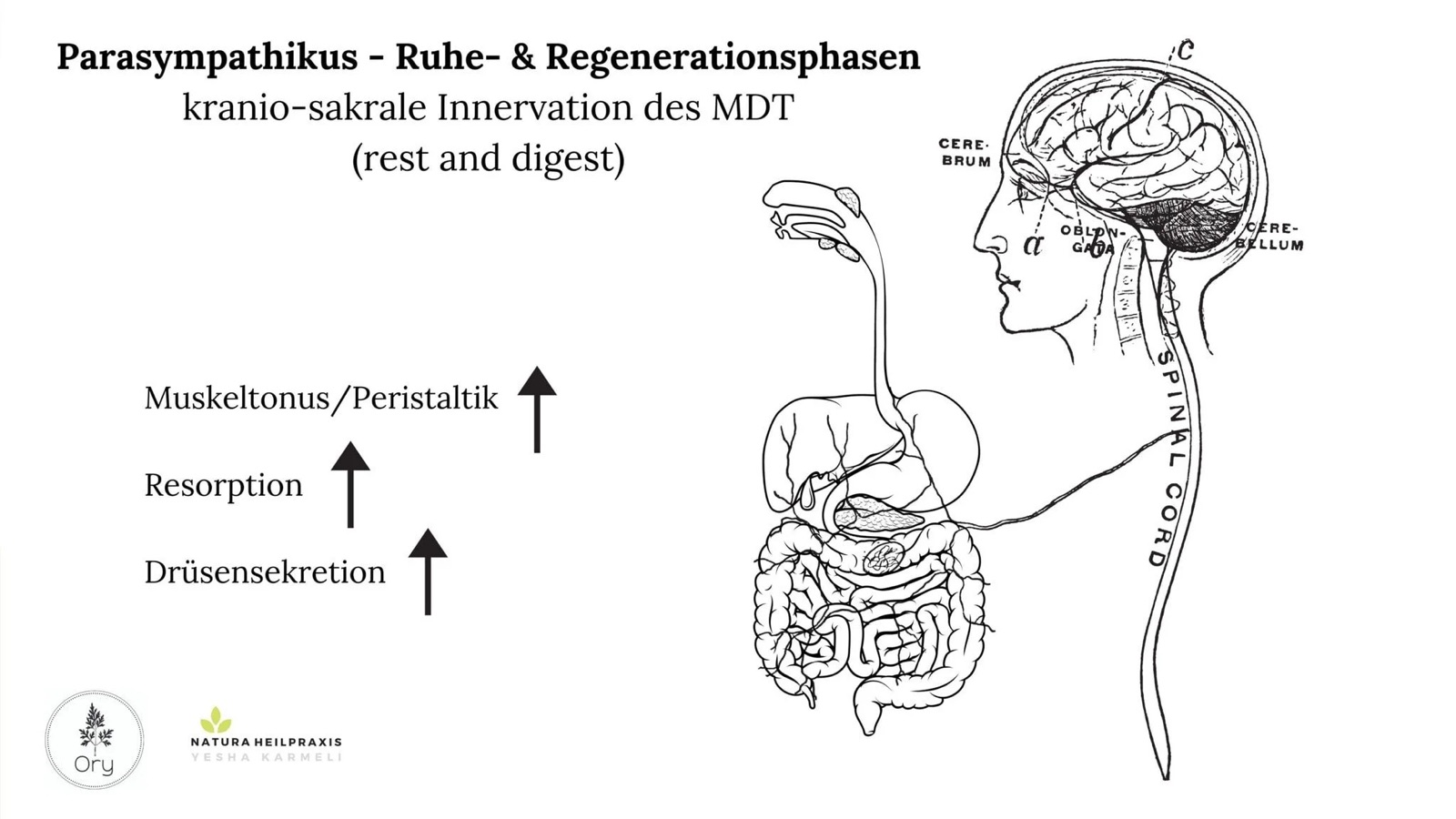
Relaxation and the bowel
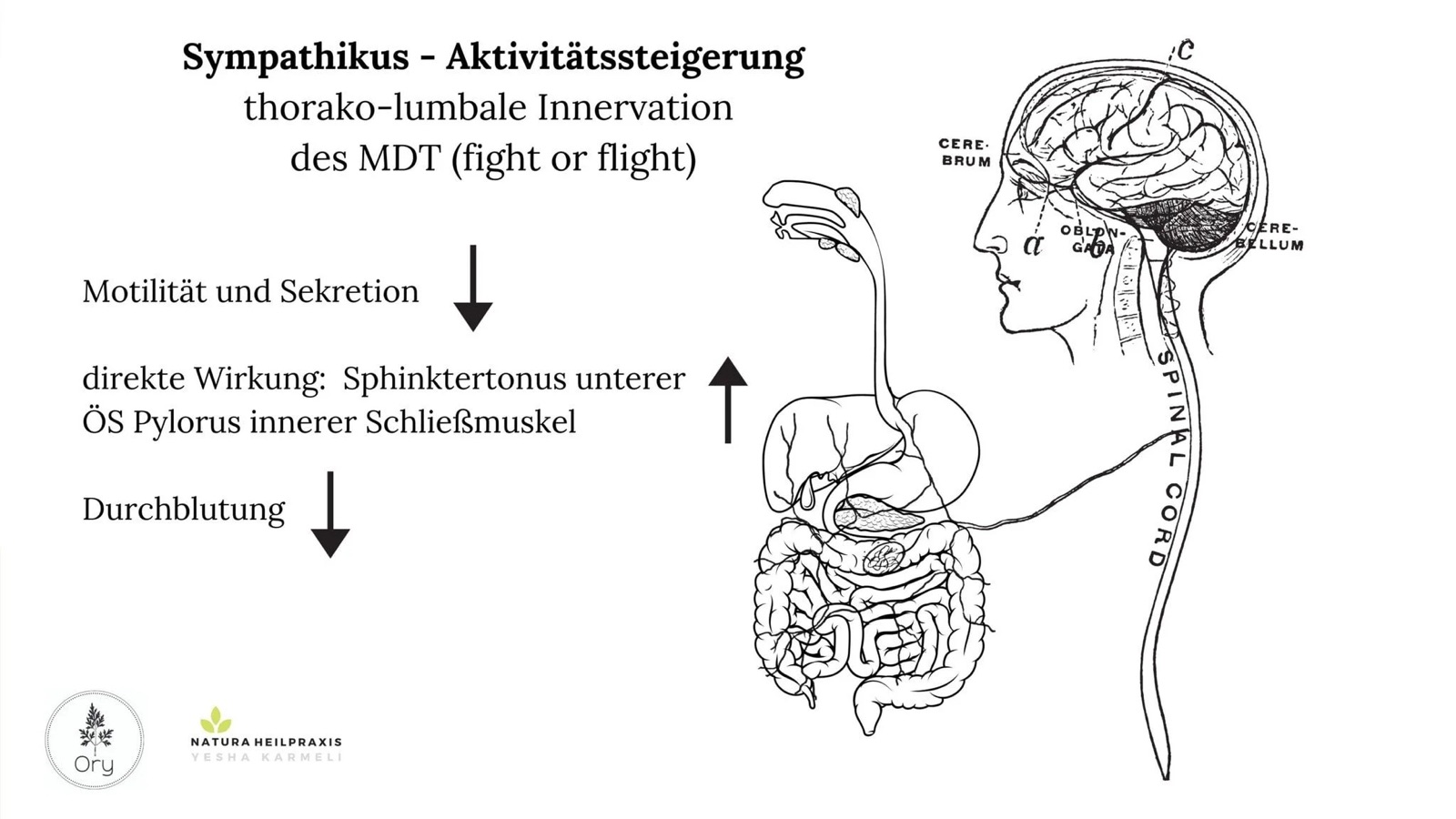
Tension and the bowel
Digestion and the psyche – a holistic view
In recent years, the topic of the gut has received increasing public attention. Popular science publications have also helped to increase interest in digestive processes and how they fit into holistic health concepts. In this context, possible interactions between digestion and psychological experience are increasingly being discussed in professional circles.
The gut and the nervous system – terminology
Terms such as “gut brain” or “gut-brain axis” are used to vividly describe the connection between the enteric nervous system (ENS) and the central nervous system.
The ENS refers to an extensive network of nerves in the gastrointestinal tract that is involved in regulating digestive processes.
In scientific models, the ENS is considered in connection with the autonomic nervous system, which includes the sympathetic and parasympathetic nervous systems. These connections are complex and the subject of ongoing research.
Stress and digestion – a holistic perspective
Holistic approaches often address the idea that persistent strain, stress and emotional factors can be accompanied by changes in autonomic processes. Digestive functions are also discussed in this context.
These are theoretical considerations that can vary greatly from person to person and do not allow any generally valid statements.
Options for holistic support with constipation
In holistic concepts, various complementary approaches are discussed for altered bowel activity. These are not a substitute for medical measures, but complementary considerations within the framework of an individual lifestyle and health orientation.
Examples of topics may include:
Looking at eating habits
Looking at drinking habits
Physical activity in everyday life
Relaxation and mindfulness approaches
reflected lifestyle factors
The selection and weighting are made individually and without blanket recommendations.
Holistic methods – an objective classification
Naturopathic methods such as colon hydrotherapy, manual applications or nutrition-related concepts are discussed in holistic medicine. They are not linked to a guaranteed effect or treatment success, but serve as a complementary consideration within the framework of individual consultation.
Microbiome and diet – theoretical connections
In the specialist literature and in research, the gut microbiome is described as a complex system that can be influenced by various lifestyle factors. Eating habits and stress are also discussed in this context.
These connections are the subject of current scientific research and do not permit any blanket conclusions or promises of effect.
Liver, gallbladder and digestion – a functional view
In holistic models, the liver is described as a central metabolic organ. Its many tasks are related to digestive and regulatory processes.
Such considerations serve as a functional classification and do not replace medical diagnostics or assessment.
Abdominal surgery – general information
After surgical procedures in the abdomen, temporary changes in bowel activity can occur. These observations are known from medical practice and are experienced very differently by each individual. Medical supervision is essential in such cases.
Summary
Changes in digestion can be perceived as distressing by those affected. Holistic concepts therefore take a broad view of lifestyle, diet, psychological stress and individual circumstances.
Important note: The content presented here is intended solely for general information and classification. It does not constitute any claims regarding healing, effects or treatment and does not replace diagnosis or treatment by a physician.
References (for classification, not for advertising purposes)
The scientific publications mentioned serve solely for general information and to classify theoretical connections. They do not constitute proof of effectiveness for individual methods.
References:
https://www.aerztezeitung.at/fileadmin/PDF/2016_Verlinkungen/State_Psyche_Verdauungstrakt.pdf
Professionally responsible: Yesha Karmeli, naturopathic practitioner (Heilpraktiker), Natura Heilpraxis Berlin. This text provides general information and does not replace individual advice.