Natura
Germany is still considered an iodine-deficient region: despite the iodization of many foods, we often do not take in enough of this trace element. This has serious consequences, especially for the thyroid gland. In this article you will learn about the possible causes, symptoms and consequences of iodine deficiency. We also inform you about how much iodine should be consumed and how you can have your personal iodine status tested.
Iodine deficiency: when an important trace element is missing
Iodine is a trace element that the body cannot produce itself. Iodine must therefore be taken in through food and drinking water. Since iodine is crucial for building thyroid hormones, iodine deficiency has serious effects on the entire human organism.
What causes iodine deficiency?
In Germany, the soils and fresh water contain only little iodine for geological reasons. During the last ice age, the trace element was washed out of the soil by meltwater and flushed into the seas. But there are other reasons for iodine deficiency: in particular, the so-called halogens, especially chlorine in drinking water, fluorine in drinking water and toothpaste and bromine in medications, increase the need for iodine. Excessive amounts of sodium chloride and heavy metals such as mercury, lead, cadmium or aluminum can also negatively affect iodine absorption.
What do we need iodine for?
Iodine is of crucial importance for the thyroid gland and thus for a healthy organism. The thyroid hormones thyroxine (T4) and triiodothyronine (T3) are necessary, among other things, for
Tissue growth and cell division
Bone formation
Brain development
Metabolism
The nervous system
Heart function
Digestion
Respiratory function
The immune system
Fat metabolism
Excretion of toxins
What are the effects of iodine deficiency?
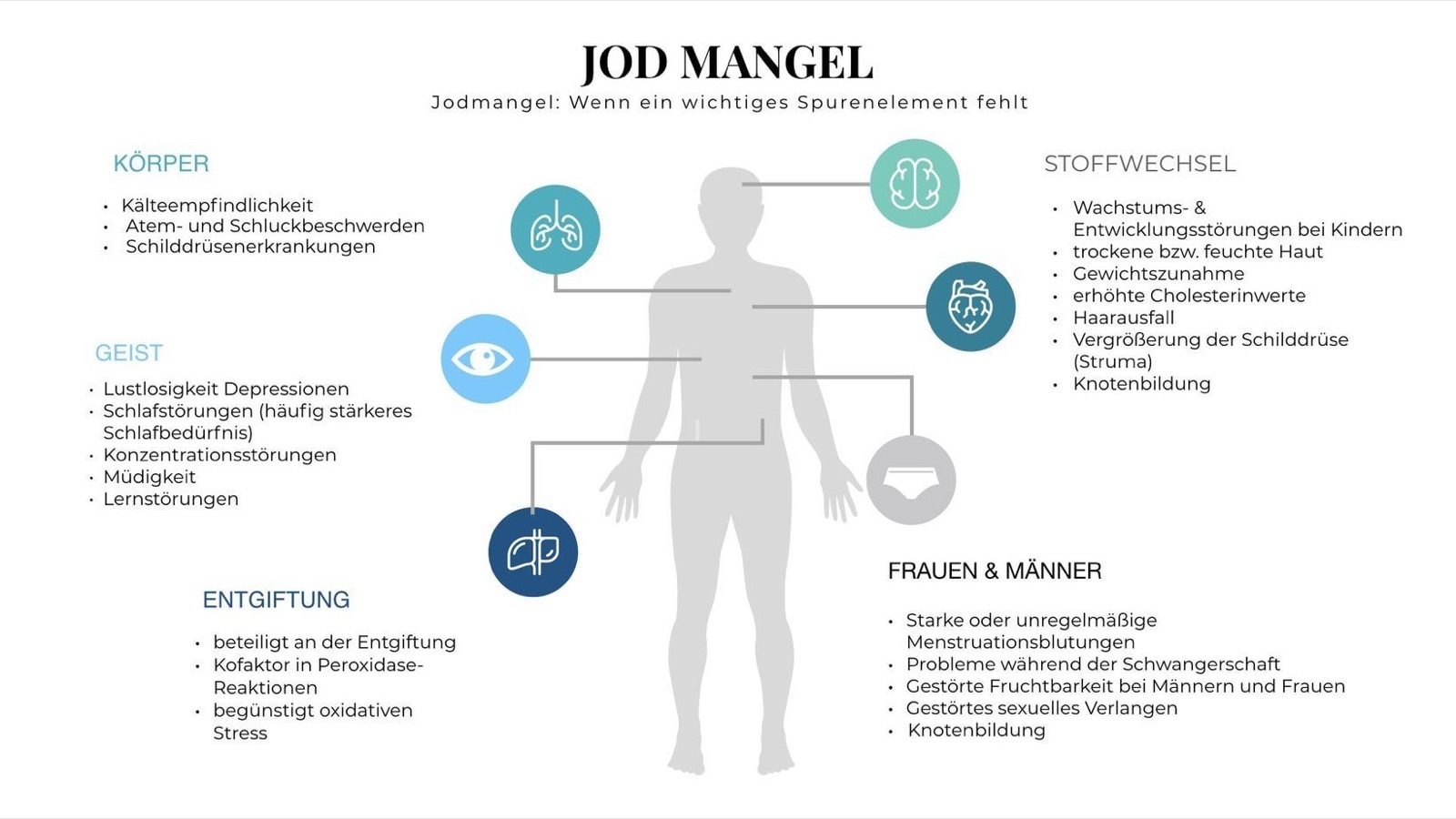
Since the thyroid gland, as described above, is responsible for a large number of biological processes in the body, iodine deficiency has correspondingly serious consequences. The digestive system becomes sluggish, the pulse slows down and susceptibility to infection increases. The growth of nails and hair is negatively affected, as is the appearance of the skin. Concentration, memory and performance also decline. Recent research also suspects links between iodine deficiency and attention deficit / hyperactivity disorder (ADHD/ADD).
Possible symptoms of iodine deficiency:
Underactive thyroid (hypothyroidism) and goiter formation (struma)
Thyroid carcinomas
Difficulty swallowing
Hoarseness
Growth disorders
Significant weight gain
Increased sensitivity to cold
Fatigue and lack of drive
Irritability
Sleep disorders
Depressive moods
Iodine requirements and iodine intake
In theory, an iodine-rich diet is the simplest and safest approach. However, due to the problems with iodine absorption described above and the resulting increased need for iodine, it is difficult to take in sufficient iodine through food and drinking water. In the case of a proven iodine deficiency, supplementation with iodine-containing preparations may therefore be considered after clarification by a physician.
The best dietary option is intake via iodized salt. It contains higher concentrations of iodine than other natural sources such as fish, dairy products and vegetables. Other foods that can help improve iodine status are algae, seaweed and kombu.
In addition, make sure that you supply your body with sufficient vitamin B2. Vitamin B2 is described in the specialist literature in connection with iodine and thyroid metabolism. Vitamin B2, in turn, is found in many foods such as meat, eggs and dairy products.
There are differing recommendations regarding daily iodine requirements: The German Nutrition Society (DGE) recommends a daily iodine intake of 180 to 200 µg of iodine for adults, up to 230 µg for pregnant and breastfeeding women and 40 to 200 µg for children and adolescents. In 2003, the DGE estimated the actual iodine intake of adults in Germany at 110–120 µg of iodine per day. This discrepancy clearly shows a situation of undersupply, especially among pregnant women.
Diagnostic options
If you suspect that you are suffering from iodine deficiency, it is important to seek professional support and obtain a diagnosis. There are various tests to determine whether or not you are suffering from iodine deficiency. One of the most commonly used diagnostic options is the thyroid function test (TFT), also referred to as the thyroid-stimulating hormone (TSH) or T3/T4 test. This test measures the level of thyroid hormones in the body and thus determines the function of the thyroid gland. Elevated TSH levels can occur with iodine deficiency, among other things, and should be clarified by a physician.
Another option for diagnosing iodine deficiency is the urine test (for urate). This test measures the amount of iodine in the urine and can help determine whether or not your body is getting enough iodine from food. The proportion of iodine in the blood serum (SI) can also be measured. Low serum iodine levels usually indicate a lack of iodine.
If there is an iodine deficiency or if the values are in the borderline range, further steps, such as taking an iodine-containing dietary supplement, should be discussed with your treating physician. Special diets or lifestyle changes may also be indicated to ensure an adequate supply.
We are happy to advise you!
We can have your iodine supply determined in our practice by means of a urine test. We are also very happy to support you with questions about iodine requirements, an iodine-rich diet and the prevention of iodine deficiency
Professionally responsible: Yesha Karmeli, naturopathic practitioner (Heilpraktiker), Natura Heilpraxis Berlin. This text provides general information and does not replace individual advice.