Natura
Vitamin and amino acid infusions are therapeutic treatments in which a combination of vitamins, minerals and amino acids is infused directly into the bloodstream. With this method, the nutrients enter the bloodstream through a vein, bypassing the digestive tract.
Background: vitamins and amino acids are essential for numerous bodily functions, including energy metabolism, immune defense, tissue regeneration and the synthesis of neurotransmitters. A deficiency in these nutrients can lead to a variety of health problems, including fatigue, a weakened immune system and slower recovery.
People often ask about infusions during times of increased need, such as stress, illness or intense physical activity. Which nutrients an infusion contains is decided individually in a consultation.
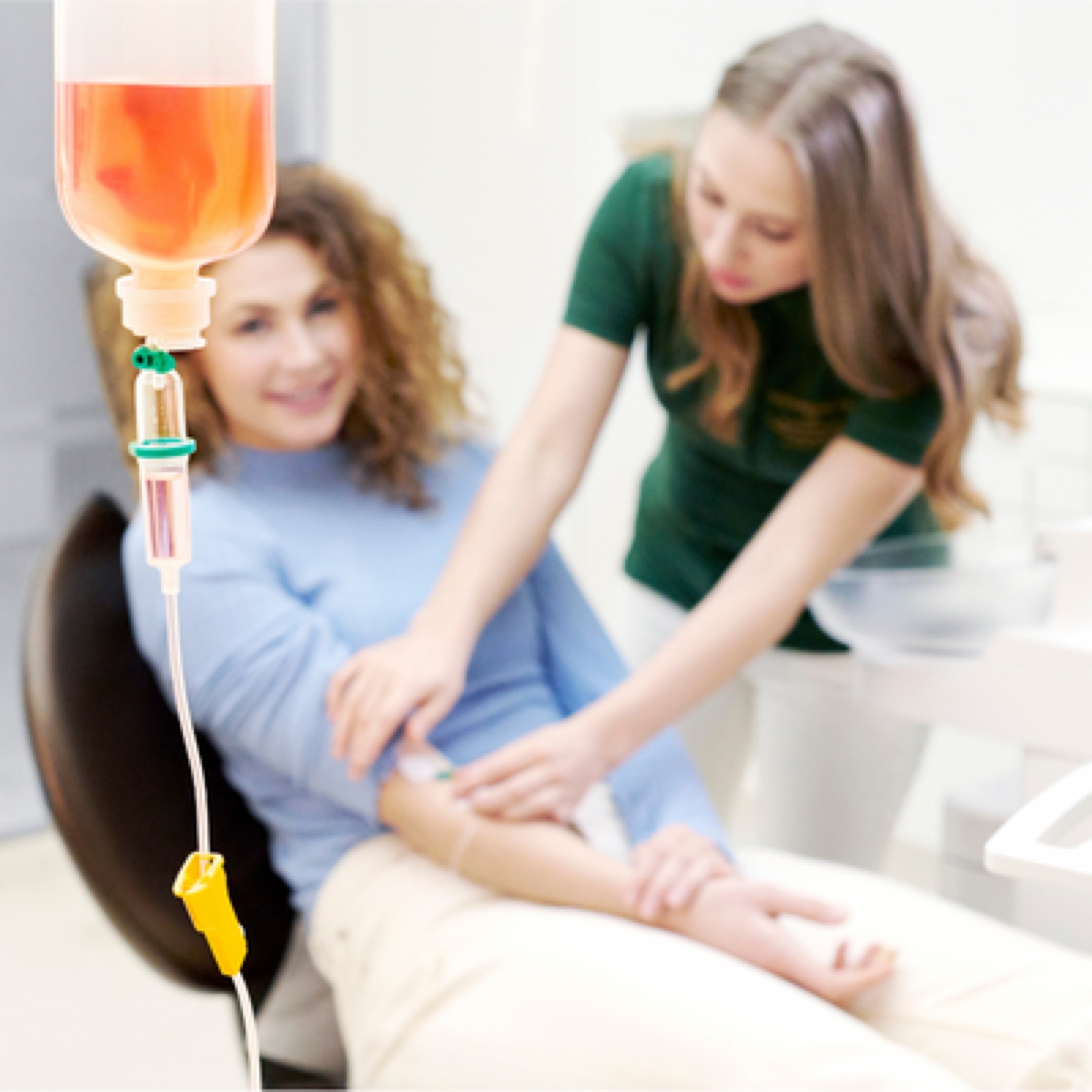
Holistic vital infusions tailored to you individually – at Natura Heilpraxis in Berlin
Which nutrients do vitamin and amino acid infusions contain?
With vitamin and amino acid infusions, the nutrients are given directly into the bloodstream. Here are the most important topics and ingredients in detail:
Nutrient delivery through a vein:
Direct uptake: With an infusion, vitamins and amino acids enter the bloodstream directly, without detours.
Bypassing the digestive tract: When nutrients are taken orally, their absorption can be impaired by stomach and intestinal problems. Infusions bypass these hurdles.
Energy metabolism:
Vitamin B complex: These vitamins are crucial for energy metabolism and help convert food into energy. They also play a role in cell production and repair.
Amino acids: They are the building blocks of proteins and essential for muscle building, tissue repair and the synthesis of enzymes and hormones.
Immune system:
Vitamin C: It contributes to the normal function of the immune system and to normal collagen formation, and contributes to the protection of cells from oxidative stress.
Zinc and other micronutrients: Zinc contributes to the normal function of the immune system.
Antioxidants:
Glutathione: An antioxidant that may be contained in infusions. In the body, it is involved in neutralizing free radicals and in metabolic processes of the liver.
Vitamin E and other antioxidants: Vitamin E contributes to the protection of cells from oxidative stress.
Nervous system:
Magnesium: Contributes to the normal function of the nervous system.
Amino acids such as tryptophan and tyrosine: They are precursors of neurotransmitters such as serotonin and dopamine, which serve as messenger substances in the brain.
Tissue and cell metabolism:
Amino acids such as arginine and glutamine: They are involved in protein metabolism and in processes of the immune system.
Vitamins and minerals: They play an important role in cell repair and in the synthesis of DNA and proteins.
Hydration and electrolyte balance:
Electrolytes such as sodium and potassium: These are often part of infusions; they are involved in fluid balance and in the function of muscles and nerves.
Vital infusions and cell metabolism: the background
Vitamin and amino acid infusions contain nutrients that are involved in numerous cellular processes. Below is an overview of the role these nutrients play in the body.
First, B-complex vitamins and amino acids such as leucine and isoleucine are involved in energy metabolism as cofactors. Second, there are antioxidants: vitamins C and E as well as glutathione are involved in neutralizing free radicals.
In addition, these nutrients are involved in DNA synthesis and cell repair. Folic acid, vitamin B12 and essential amino acids such as lysine are important for cell division and renewal. Zinc and selenium contribute to the normal function of the immune system, while glutamine serves as an energy source for immune cells.
Vitamin D and amino acids such as tyrosine and tryptophan are essential for cell communication and neurotransmission. Finally, vitamin C and amino acids such as proline promote collagen synthesis and tissue repair, which is indispensable for the health of skin, bones and connective tissue.
In summary, vitamin and amino acid infusions contain nutrients that are involved in energy metabolism, protection against oxidative stress, DNA synthesis, the immune system, as well as cell communication and tissue repair.
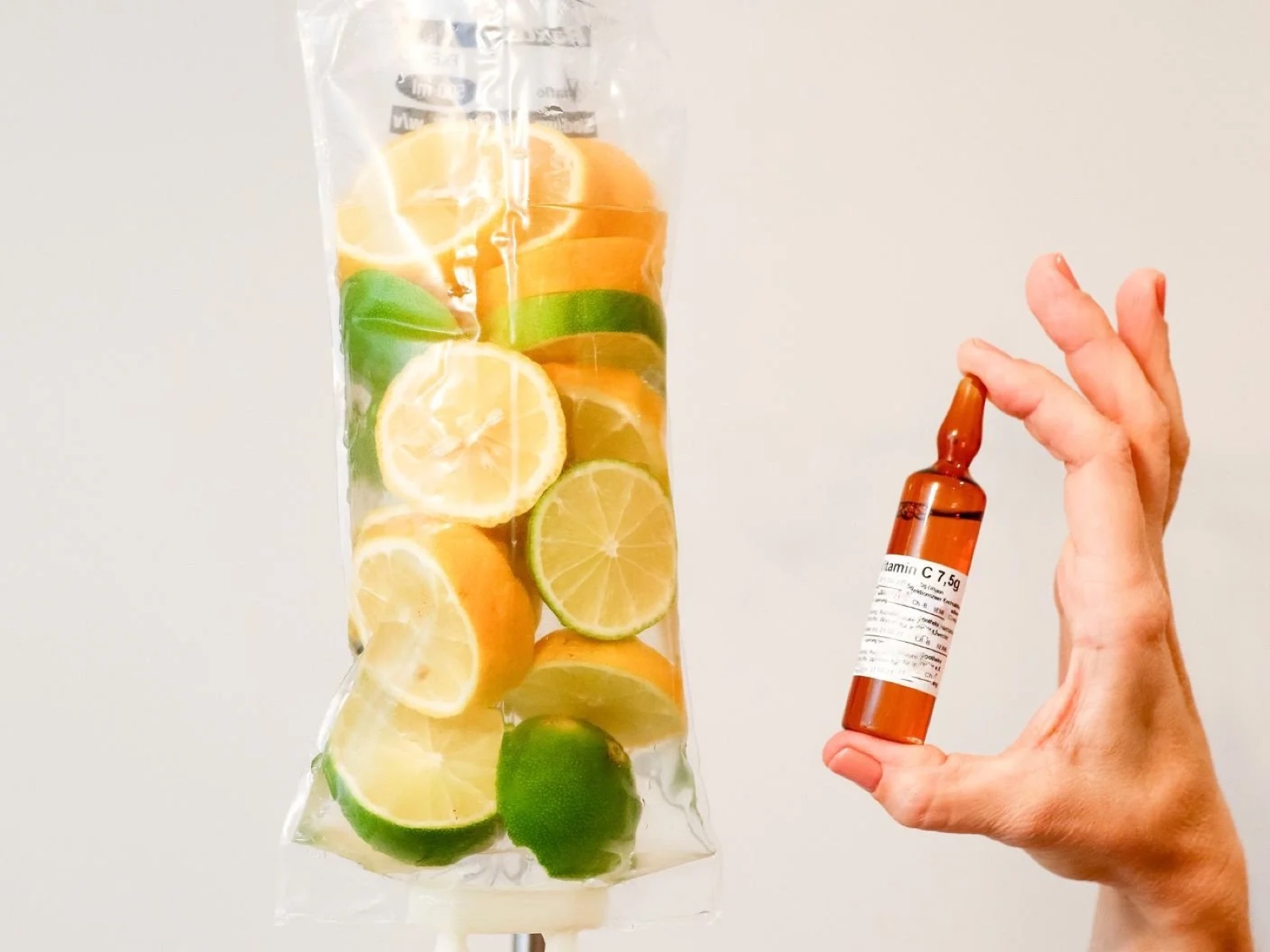
In a vitamin C infusion, vitamin C is given through a vein directly into the bloodstream.
Nutrients and the immune system
Several nutrients that may be contained in vitamin and amino acid infusions play a role in the immune system. Here is an overview of the most important aspects:
Immune cell function:
Vitamin C: Contributes to the normal function of the immune system and to normal collagen formation for the function of the skin.
Zinc: Necessary for the development and function of immune cells such as T lymphocytes and natural killer cells. A zinc deficiency can weaken the immune response.
Antioxidant protection:
Glutathione and vitamin E: Protect immune cells from damage caused by free radicals. This matters because immune cells are exposed to increased oxidative stress while fighting an infection.
Vitamin C: Acts as an antioxidant and contributes to the protection of cells from oxidative stress.
Immune cell proliferation:
Amino acids such as glutamine: Serve as an energy source for immune cells and support their growth and division. Glutamine is particularly important for the function of macrophages and lymphocytes.
Arginine: Is a precursor of nitric oxide, a messenger substance involved, among other things, in regulating the width of blood vessels and in defense processes.
Inflammatory processes:
Omega-3 fatty acids (often contained in infusions): Are starting materials for messenger substances involved in regulating inflammatory processes.
Vitamin D: Contributes to the normal function of the immune system.
Cell formation:
Vitamins B6 and B12: Essential for the production and maturation of red blood cells and immune cells. They contribute to the synthesis of DNA and proteins that are important for cell function.
Folic acid: Necessary for cell division and thus for the rapid multiplication of immune cells while the body is fighting an infection.
In summary, several components of vitamin and amino acid infusions are involved in the function and proliferation of immune cells, in protection against oxidative stress and in the regulation of inflammatory processes. Whether an infusion is an option, and in which composition, is clarified in a personal consultation.
Vitamin and amino acid infusions and energy metabolism
Several components of vitamin and amino acid infusions are involved in energy metabolism. First, they can contain a complete spectrum of B vitamins, such as B1, B2, B3, B5, B6, B7, B9 and B12. These vitamins act as cofactors in enzyme reactions that convert food into usable energy (ATP). A deficiency in these vitamins can lead to fatigue and lack of energy.
Second, they can contain coenzyme Q10 and L-carnitine, which are associated with the function of the mitochondria, the "power plants" of the cells. Coenzyme Q10 plays a key role in mitochondrial function and ATP production, while L-carnitine transports fatty acids into the mitochondria, where they are oxidized to generate energy.
In addition, amino acids such as leucine, isoleucine and valine (branched-chain amino acids) supply direct energy to muscle cells and support general metabolism. Glutamine serves as an energy source for cells of the immune system and the gut.
In summary, vitamin and amino acid infusions contain nutrients that are involved in energy metabolism, mitochondrial function and general metabolism.
Vital infusions and metabolism
Vital infusions are a naturopathic procedure. A mixture of essential vitamins, minerals and amino acids is given directly into the bloodstream. They often contain B vitamins such as B1, B2, B3, B5, B6, B7, B9 and B12, which act as cofactors in the enzyme reactions of energy metabolism through which the body converts food into energy (ATP). A deficiency in these vitamins can slow down metabolism and lead to lack of energy.
In addition, vital infusions often contain coenzyme Q10 and L-carnitine, which are involved in mitochondrial function and ATP production. Coenzyme Q10 is crucial for energy production in the cells, while L-carnitine transports fatty acids into the mitochondria, where they are used to generate energy. Amino acids such as leucine, isoleucine and valine provide direct energy for muscle cells and support general metabolism by promoting the building and repair of tissue.
Vital infusions can also contain antioxidants such as vitamin C and glutathione, which are involved in neutralizing free radicals. The composition of nutrients is determined individually.

Certain B vitamins as well as the amino acids tyrosine and tryptophan are described in connection with nerve metabolism.
Nutrients and brain metabolism
Some components of vital infusions are related to the metabolism of the brain and nervous system. A mixture of essential vitamins, minerals and amino acids is given directly into the bloodstream.
Brain metabolism:
B vitamins (B1, B2, B3, B5, B6, B7, B9, B12): These vitamins are crucial for energy metabolism in the brain. They act as cofactors in enzymatic processes that are necessary for converting food into energy.
Neurotransmitters:
Amino acids such as tyrosine and tryptophan: Tyrosine is a precursor of dopamine, a neurotransmitter that is associated with, among other things, attention and motivation. Tryptophan is a precursor of serotonin, a messenger substance involved in regulating mood.
Acetyl-L-carnitine: This amino acid is described in connection with the formation of acetylcholine, a neurotransmitter involved in memory and learning processes.
Energy production:
Coenzyme Q10 and L-carnitine: These substances are involved in mitochondrial function and in the production of ATP, the energy source of the cells.
Antioxidants and cell metabolism:
Vitamin C and glutathione: These antioxidants are involved in neutralizing free radicals. Healthy cell metabolism is essential for maintaining cognitive functions.
Hydration and electrolyte balance:
Electrolytes such as sodium, potassium and magnesium: These support neuronal communication and the function of muscle and nerve cells.
An expert practice is essential
When administering vital infusions, it is crucial to ensure proper advice and to use high-quality infusion components. It is also important to take suitable precautions and to observe contraindications. Contraindications are circumstances or conditions under which the use of vital infusions may not be recommended or may even be dangerous. Here are some common contraindications:
Allergies or intolerances: People who are allergic or intolerant to certain vitamins, minerals or amino acids should avoid certain infusion components.
Kidney disease: People with kidney disease may have difficulty excreting excess minerals, which can lead to accumulation in the body. Some infusion components, especially electrolytes such as potassium and magnesium, may need to be limited or avoided in such cases.
Heart disease: Certain infusion components such as magnesium can increase the risk of cardiac arrhythmias in people with heart disease. Careful monitoring and adjustment of the infusion composition is required in such cases.
Pregnancy and breastfeeding: During pregnancy and breastfeeding, potential risks to the unborn child or the breastfed baby must be taken into account. Some vitamins and minerals can be harmful in high doses.
Drug interactions: Certain medications can interact with infusion components and cause undesirable side effects. A comprehensive history of medication use is therefore required.
Certain medical conditions: There are other medical conditions in which the administration of vital infusions may not be recommended, such as liver disease, diabetes mellitus and certain cancers.
A thorough medical history and examination by a qualified physician or healthcare provider is essential to identify potential contraindications and to make the infusion treatment safe.
Conclusion – vital infusions at a glance
In summary, infusion therapy with vitamins and amino acids is a procedure in which nutrients are given directly into the bloodstream. The topics described in this context are nutrient supply, metabolism, the immune system, mental performance and regeneration.
Common reasons people ask about infusions are lack of energy and fatigue, susceptibility to infections, stress, athletic strain or chronic complaints. Signs of illness should be clarified by a physician; individual advice and care by qualified medical staff is essential.
Professionally responsible: Yesha Karmeli, naturopathic practitioner (Heilpraktiker), Natura Heilpraxis Berlin. This text provides general information and does not replace individual advice.