Natura
The liver-gallbladder cleanse: procedure and background
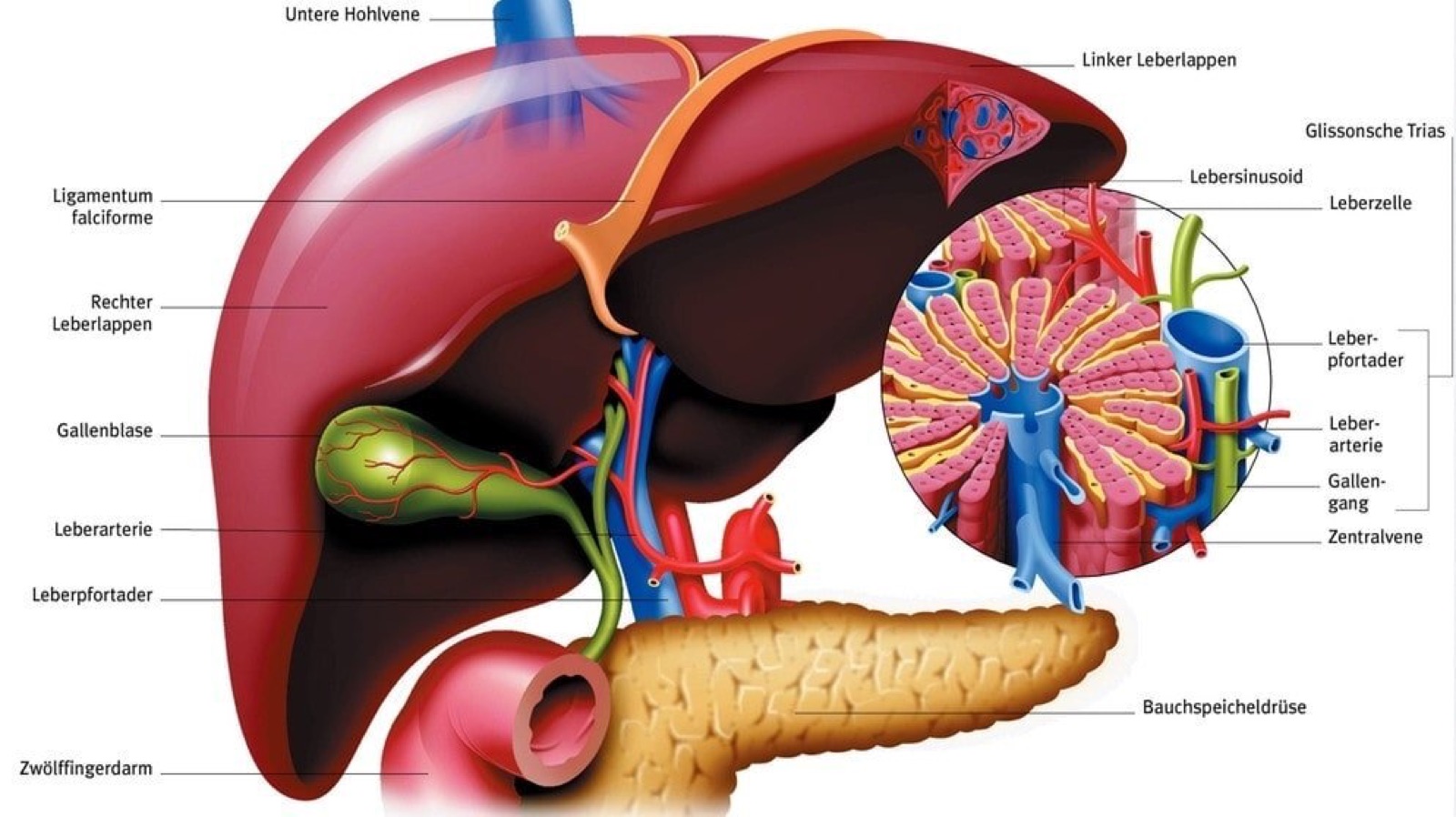
The liver-gallbladder cleanse is a naturopathic method. The liver is one of the most important organs of the body and has many functions. It is both a filter for blood and lymph to remove harmful substances and a laboratory that converts nutrients into enzymes and hormones. If the liver no longer functions as well, health problems can arise.
The body is a complex system of organs and mechanisms. Within it, the liver performs a detoxifying function. With a flow of 1.5 liters of blood per minute, the liver has a considerable workload. If you compare the liver to a water filter, it becomes clear how much it accomplishes every day.
In naturopathy, the liver-gallbladder cleanse is described in connection with the topic of detoxification. What exactly is done is explained further below.
Our liver is a marvel of nature.
A little genius with more than 100 functions for the well-being of us all. Hardly anyone knows what an enormous filter system the liver represents as the largest gland with the highest regenerative capacity in the human body.In naturopathy, its “cleansing” is understood as a concept that is often applied as part of detox or fasting regimens.
The liver is also our largest organ in the body and accounts for approx. 2% of total body weight, which corresponds to about 1.5 kilograms in an average adult [1].
The liver performs many different, interconnected functions [1]. Some of the main functions of the liver are:
Filtration of the blood
Metabolism of carbohydrates, proteins and fats
Formation of bile
Storage of vitamins (especially vitamins A, D and B12)
Storage of iron as ferritin
Formation of substances for blood clotting
Breakdown or excretion of drugs and foreign substances (the liver is known for its ability to detoxify or eliminate many drug residues and chemicals via the bile [1]).
Liver-gallbladder cleanse in Berlin
In naturopathy, there are concepts for this such as the liver-gallbladder cleanse, also called the liver-gallbladder regimen here. In the concept of cleansing the liver and gallbladder, natural remedies such as medicinal herbs and oils are used. The procedure we offer is a four-day regimen in which various measures are carried out one after the other. During the process, medicinal herbs, teas, oils, liver compresses and freshly pressed juices are used.
More about our offer in Berlin
Some components of the liver-gallbladder cleanse
Olive oil: The use of olive oil to cleanse the gallbladder has been practiced for centuries, both as a folk remedy and by traditional physicians [2] [3]. In a review article, various effects of extra virgin olive oil on the liver are discussed, which are associated, among other things, with its high content of unsaturated fatty acids [4].
Cassia fistula: This plant is native to South Asia and is also cultivated in other parts of the world. In an experimental study, liver-protective properties of Cassia fistula were investigated [5]. Further studies describe antioxidant, anti-inflammatory, antidiabetic and antimicrobial properties [6].
Castor oil: In Ayurveda, castor oil is used as a laxative. It increases small intestinal peristalsis. The laxative effect is not caused by irritation of the mucous membrane, as was previously assumed, but by increased secretion of electrolytes in the intestine [7]. Castor oil is a component of traditional Ayurvedic detoxification procedures [8].
Sources[1] Hall, J. E., & Guyton, A. C. (2021). Guyton and Hall textbook of medical physiology 14th Edition. Philadelphia, PA: Elsevier.[2] Goodhart J. F. (1892). Remarks on Gall Stones and on their Treatment by the Administration of Large Doses of Olive Oil. British medical journal, 1(1622), 219–222. https://doi.org/10.1136/bmj.1.1622.219[3] Stephenson W. H. (1895). Treatment of Gall Stones by Large Doses of Olive Oil. British medical journal, 1(1795), 1144. https://doi.org/10.1136/bmj.1.1795.1144[4] Soto-Alarcon, S. A., Valenzuela, R., Valenzuela, A., & Videla, L. A. (2018). Liver Protective Effects of Extra Virgin Olive Oil: Interaction between Its Chemical Composition and the Cell-signaling Pathways Involved in Protection. Endocrine, metabolic & immune disorders drug targets, 18(1), 75–84. https://doi.org/10.2174/1871530317666171114120552
[5] Das, S., Sarma, G., Barman, S. (2008).Hepatoprotective Activity Of Aqueous Extract Of Fruit Pulp Of Cassia Fistula (Afcf) Against Carbon Tetrachloride (Ccl4). Journal of Clinical and Diagnostic Research, 2:1133-1139. https://www.jcdr.net/articles/PDF/353/290_E(S)_F(P)_R(P)_PF_P.pdf
[6] Rahmani A. H. (2015). Cassia fistula Linn: Potential candidate in the health management. Pharmacognosy research, 7(3), 217–224. https://doi.org/10.4103/0974-8490.157956[7] Schrott, E., Ammon, H.P.T (2012). Heilpflanzen der ayurvedischen und der westlichen Medizin. Berlin Heidelberg: Springer-Verlag.[8] Herron, R. E., & Fagan, J. B. (2002). Lipophil-mediated reduction of toxicants in humans: an evaluation of an ayurvedic detoxification procedure. Alternative therapies in health and medicine, 8(5), 40–51.
Professionally responsible: Yesha Karmeli, naturopathic practitioner (Heilpraktiker), Natura Heilpraxis Berlin. This text provides general information and does not replace individual advice.