Natura
Amalgam Removal - Precautions
 An expert commission at the Robert Koch Institute in Berlin issued the recommendation to remove amalgam only under certain precautions. These include the dentist using a mist suction device, a saliva ejector and water spray cooling to avoid heating. In addition, the dentist should remove as much amalgam as possible mechanically, i.e. without drilling. The waste must be disposed of in accordance with regulations. During pregnancy and breastfeeding, women should, as a precaution, refrain from having their fillings replaced. In emergencies, the dentist can treat individual teeth using a gentle technique.
The Invention of the Rubber Dam
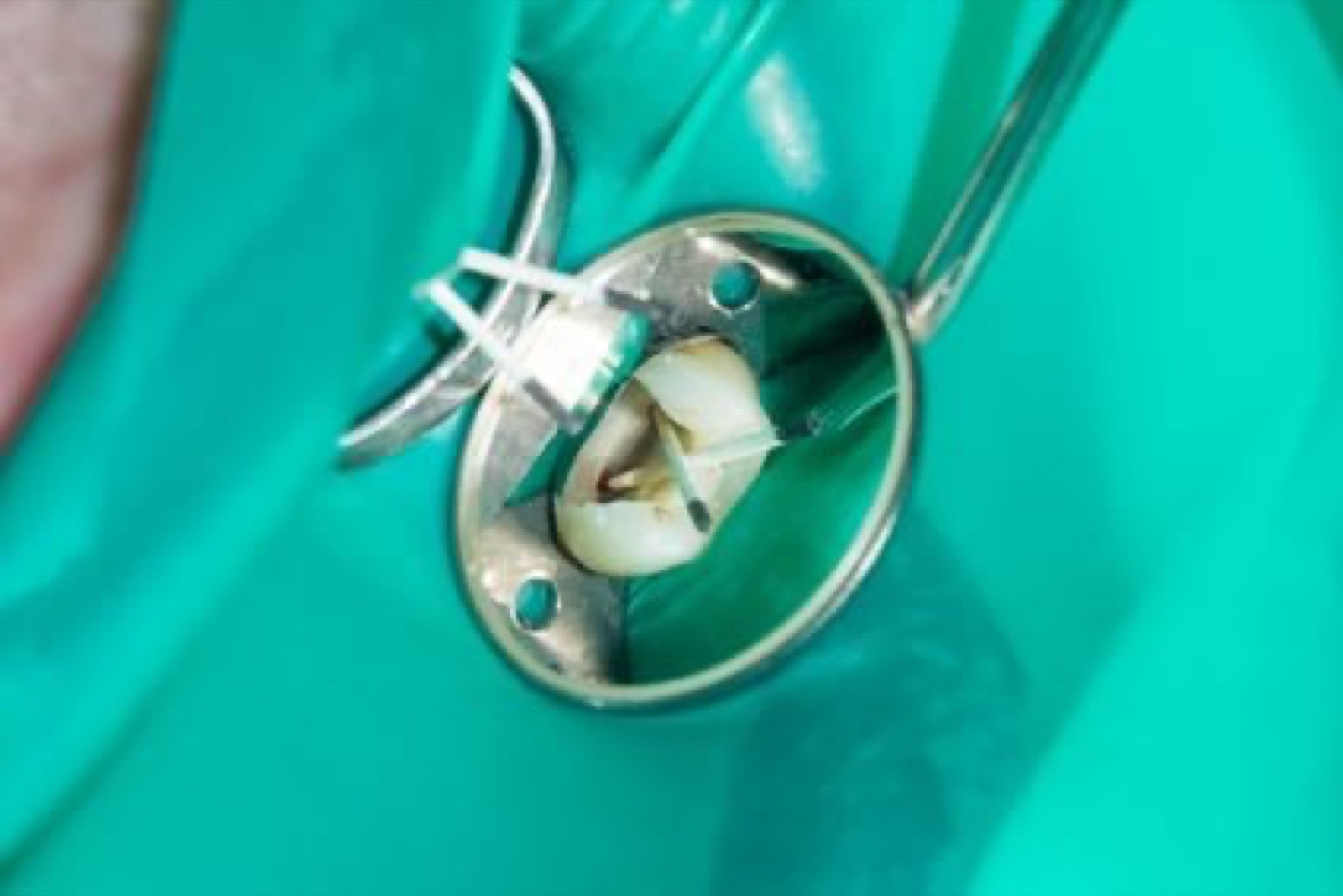
The invention of the rubber dam is attributed to the American dentist Dr. Sanford Christie Barnum (1838-1885) (Christen, 1977). Between 1862 and 1864, he was the first to develop the method of isolating a tooth with a perforated rubber sheet that was actually used as a protective napkin. Within three years, the method spread so quickly that it was already described as "widespread" in 1867 (Barbakow, 1965).
Main Arguments for Using a Rubber Dam
- Protecting the patient from aspirating or swallowing small foreign bodies such as amalgam
- A dry and clearly visible working field
- Protection of the soft tissues
- Infection prophylaxis for patient and dentist
- The possibility of disinfecting the working field
Further articles and links on this topicInfusion therapy
Professionally responsible: Yesha Karmeli, naturopathic practitioner (Heilpraktiker), Natura Heilpraxis Berlin. This text provides general information and does not replace individual advice.