Natura
Diabetes, a Widespread Disease – Causes, Symptoms, Therapy
What Does Diabetes Mellitus Mean?
Diabetes mellitus is a chronic metabolic disease characterized by chronically high blood sugar levels. For this reason, diabetes mellitus is also commonly referred to as "sugar disease." The risk of secondary diseases, such as wound healing disorders, a weakened immune system, neuropathies (diseases of the nervous system) and visual disturbances, is greatly increased.
About 9% of the population in Germany suffers from diabetes mellitus.
At What Value Is Someone Considered Diabetic?
Blood sugar values in adults:
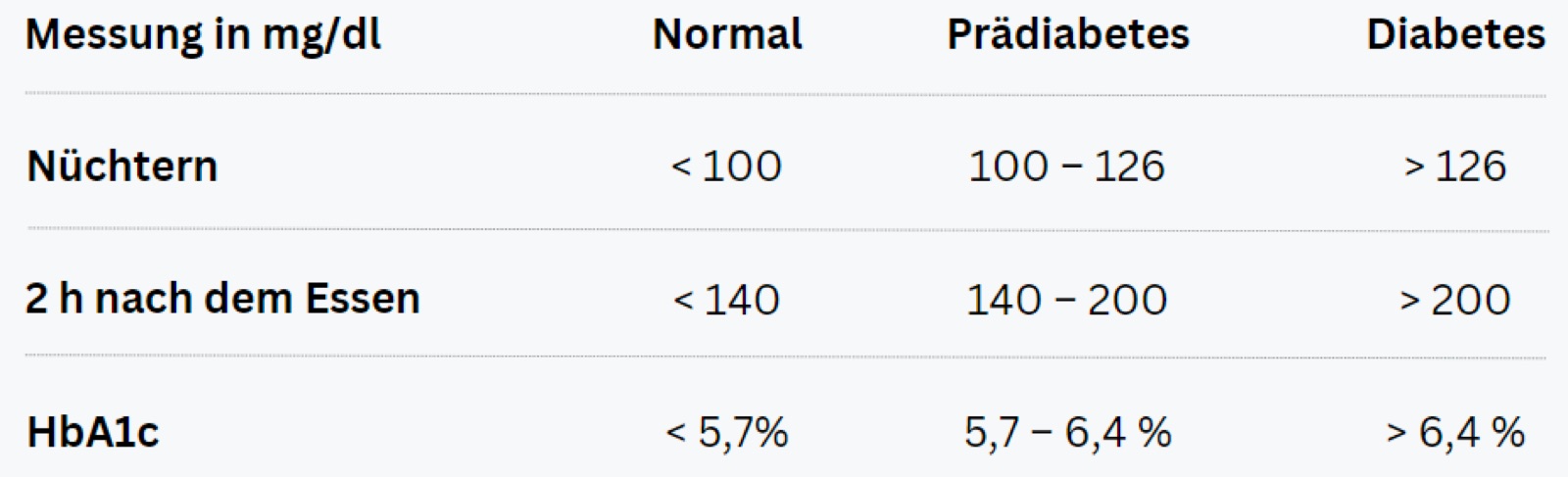
What Does the HbA1c Value Mean?
The HbA1c value is colloquially also called the "blood sugar memory," because it allows conclusions to be drawn about blood sugar levels over the last 8–12 weeks. This value is therefore a long-term parameter used for diagnosing diabetes and monitoring its course.
HbA1c is a part of the hemoglobin of red blood cells to which glucose is bound. That is why it is also called glycated hemoglobin. The HbA1c value is measured as a proportion of total hemoglobin.
How Does Diabetes Mellitus Develop?
Depending on the underlying cause of the diabetes, different types can be distinguished:
Type 1 diabetes:
The interaction of several factors, such as hereditary predisposition and autoimmune processes, leads to the irreversible destruction of the beta cells of the pancreas, which produce insulin, a hormone important for regulating our blood sugar level. Without insulin, most of the body's cells cannot be supplied with the necessary energy in the form of glucose.
The age of onset is usually between 11 and 13 years.
Type 2 diabetes:
Here the problem lies in the periphery, i.e. the body's cells respond less to insulin (= insulin resistance). In combination with impaired function of the insulin-producing beta cells of the pancreas, this leads to chronically high blood sugar levels and an insufficient supply of glucose to our body cells. The entire balance of blood sugar regulation is disturbed.
The age of onset is usually 40 and over, which is why this type is also called "age-related diabetes."
Triggering Factors Are Usually
an unhealthy diet (e.g. lots of high-fat, sugary food)
increased body weight, increased visceral fat (belly fat)
low HDL level ("good fats")
elevated triglycerides
low vitamin D level
stress / elevated levels of stress hormones such as cortisol
chronic lack of exercise
Prediabetes:
This is a preliminary stage of manifest type 2 diabetes. Accordingly, the same triggering factors are present. Although the blood sugar value is below the diabetes threshold, it is already higher than the normal value. If the risk factors mentioned persist over a longer period, the body's compensatory mechanisms are exhausted and manifest type 2 diabetes develops.
In the section "What Approaches Are There for Diabetes Mellitus?" you will find interesting and scientifically supported information showing that a change in lifestyle can prevent the development of manifest type 2 diabetes.
What Symptoms Occur with Diabetes Mellitus?
The symptoms can be very diverse:
food cravings
increased thirst
weakness, reduced performance
tiredness
increased urination
increased susceptibility to infections
dry, itchy skin
Prediabetes in particular often shows no clear symptoms. However, the symptoms mentioned above can become prominent, especially in the late phase of prediabetes.
What Approaches Are There for Diabetes Mellitus?
There are different ways of addressing this metabolic disease and limiting the pathological effects of chronically elevated blood sugar levels on the body. Above all, the aim is to normalize blood sugar levels as far as possible. Depending on the type, conventional medicine uses different medications, such as artificial insulin for insulin-dependent diabetes (this corresponds to type 1 diabetes and very advanced type 2 diabetes) or metformin for type 2 diabetes.
In naturopathy and alternative medicine in particular, the focus is on possibly addressing the causes, especially in prediabetes. Various holistic approaches are described for this – naturopathic procedures for type 2 diabetes, always as a complement to treatment by a physician:
weight reduction, dietary change (especially high-fiber, low-calorie food)
fasting / intermittent fasting
homeopathy
sport / generally increasing physical activity in everyday life
There is also a clear scientific consensus that lifestyle interventions have strongly positive effects, especially in prediabetes, and that blood sugar levels can even normalize permanently as a result:
https://www.studien-in-berlin.de/praediabetes/
https://link.springer.com/article/10.1007/s15006-017-9430-y
https://flexikon.doccheck.com/de/Prädiabetes
This high-quality study found that type 2 diabetes is not an insurmountable fate and can regress in some people through weight reduction (remission):
Click the button below to load the content from www.ernaehrungsmedizin.blog.
How Do Stress and Depression Affect Diabetes Mellitus?
Stress and depression place a heavy burden on our bodies. Adaptation processes are activated via biological mechanisms that enable the body to adapt to this burden. A key mechanism is the activation of the hypothalamic-pituitary-adrenal axis (also called the "stress axis" or "HPA axis" for short). Via this stress axis, the adrenal cortex is stimulated to release more of the hormone cortisol, so that the cortisol level rises. As a result, the physiological fluctuations in cortisol over the course of the day decrease. Cortisol causes an increase in blood sugar levels and a reduction in insulin resistance. In addition, it causes an increase in visceral fat tissue (belly fat). Studies have shown that the combination of insulin resistance and central obesity in particular increases the risk of developing type 2 diabetes.
You can read about how increased fat tissue correlates with diabetes in the next section.
Why Does Being Overweight Increase the Risk of Developing Diabetes?
Fat tissue is not only responsible for the important energy supply of our active cells, but also for the production and release of adipokines. Adipokines are hormones that regulate our feelings of hunger and satiety. They also influence the entire lipid and glucose metabolism and control inflammatory processes. The best-known representatives are leptin and adiponectin.
Adiponectin, for example, increases the sensitivity of cells to insulin and is also said to have an arteriosclerotic effect. The fat stores of adipocytes (fat cells) have only a limited storage capacity. If they are full, for example due to a one-sided diet high in fat and sugar, adiponectin synthesis also decreases. The positive effects of this hormone automatically decrease, which leads to dysregulation on many levels. The sensitivity of the cells to insulin decreases, which increases insulin resistance and thus also the risk of developing type 2 diabetes.
Sources: Stress, depression and diabetes mellitus:
Adiponectin: https://pubmed.ncbi.nlm.nih.gov/16823476/
Diabetes and Fasting
During fasting, numerous changes take place in the body. Anyone can observe the transformation the body undergoes in themselves. But what exactly happens in our body? And how does this affect type 2 diabetes? Since no food is supplied from outside, the body draws energy from itself – nourishment from within. Metabolism shifts toward catabolism (breakdown). Blood sugar levels fall, and with them insulin secretion. The insulin-producing beta cells of the pancreas are less strained during this phase. More glucagon is released, a hormone that is also described as the counterpart of insulin. Glucagon promotes the breakdown of glycogen (the storage form of glucose, which is located mainly in the muscles and liver), and there is increased new formation of glucose (= gluconeogenesis) in the liver.
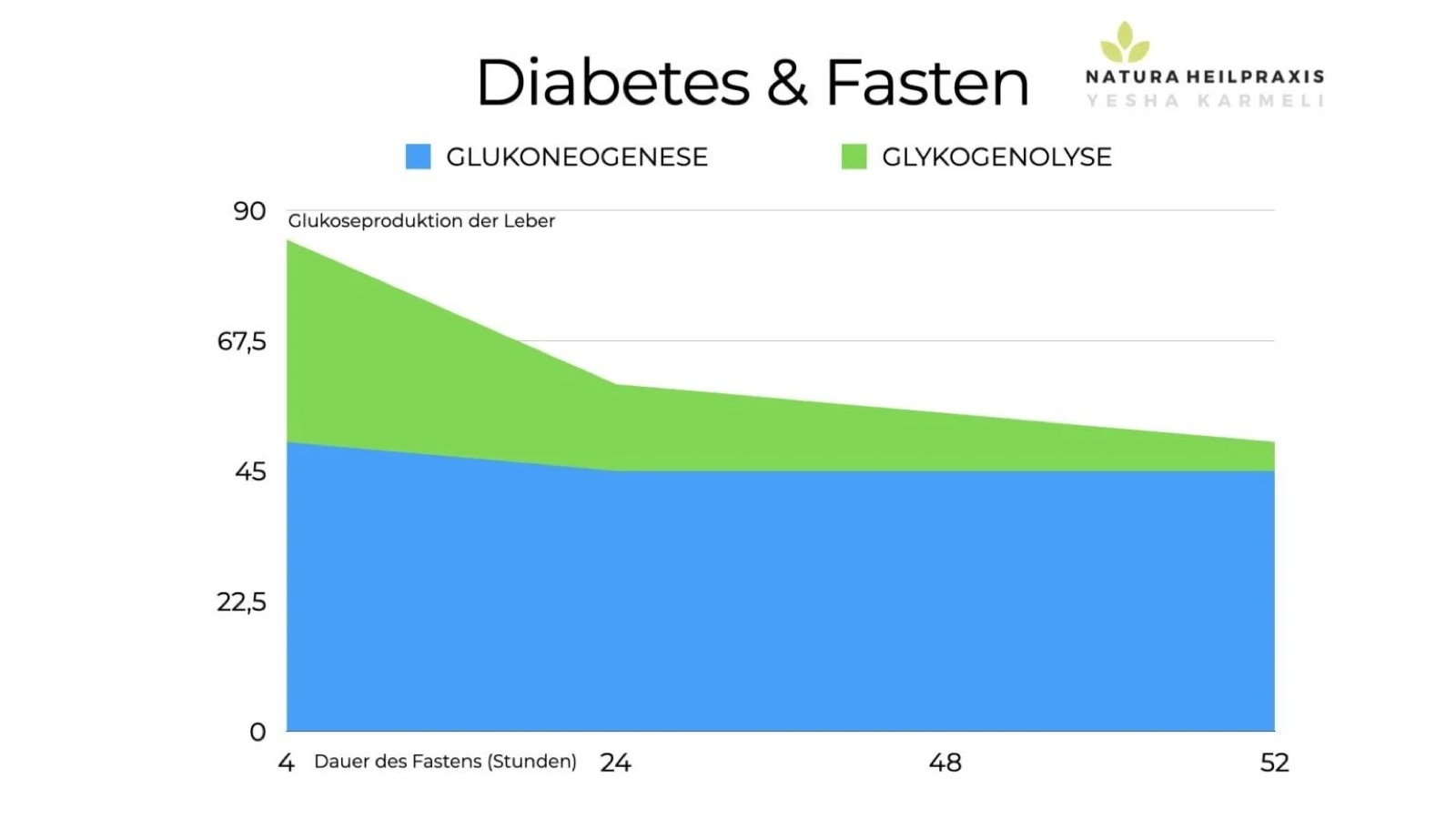
The body also obtains energy from fat reserves by breaking down fatty acids via beta-oxidation into acetyl-CoA, which is further metabolized in the citric acid cycle. Once our body has switched to fat metabolism, so much acetyl-CoA accumulates over time that ketone bodies are formed from it for energy production. Our brain, which needs a lot of energy, switches to ketone body metabolism after just three days without food.
Whether fasting can cure diabetes has not yet been demonstrated in studies. However, studies are investigating what influence fasting has on the beta cells.
https://www.netdoktor.de/magazin/diabetes-heilung-durch-fasten/
Summary – Diabetes as a Widespread Disease and Naturopathy:
The treatment of diabetes mellitus is above all about a kind of reprogramming of the metabolism. There are many adjustable factors that influence blood sugar levels. The preceding explanation describes weight loss through dietary change, fasting and sport, as well as stress reduction, as key pillars in dealing with diabetes. The treatment of diabetes belongs in the hands of physicians.
——————-
Literature
Raison CL et al. (2006): Cytokines sing the blues: inflammation and the pathogenesis of depression. Trends Immunol. 27(1): 24-31. doi: 10.1016/j.it.2005.11.006
Engler H et al. (2017): Selective increase of cerebrospinal fluid IL-6 during experimental systemic inflammation in humans: association with depressive Symptoms. Mol Psychiatry. 22(10): 1448-1454. doi: 10.1038/mp.2016.264.
People with diabetes are three to four times more likely to be depressed than people with a healthy metabolism; conversely, people with persistent depression have a higher risk of developing diabetes. According to a recent study, metabolic syndrome makes antidepressant therapy more difficult:
Mulvahill JS et al. (2017): Effect of Metabolic Syndrome on Late-Life Depression: Associations with Disease Severity and Treatment Resistance. J Am Geriatr Soc. 65(12): 2651-2658. doi: 10.1111/jgs.15129.https://pubmed.ncbi.nlm.nih.gov/30067154/
If you would like to make an appointment or have any questions, please leave us a message.
We will get back to you as soon as possible.
Professionally responsible: Yesha Karmeli, naturopathic practitioner (Heilpraktiker), Natura Heilpraxis Berlin. This text provides general information and does not replace individual advice.