
 Natura
The Spine
Treatment options for acute and chronic back pain — and support for physical complaints and chronic conditions.
The spine carries the body, keeps it mobile and protects the spinal cord. Nerves emerge between every two vertebrae. They supply not only muscles and skin but, through the autonomic nervous system, also internal organs, blood vessels and glands. That is why a back problem rarely stays in the back — and why it is worth looking at the back as a whole rather than only at the spot that hurts. At Natura Heilpraxis we combine several naturopathic methods into a course of treatment over a number of sessions. And the core of every treatment remains your own movement — everything else supports it, nothing replaces it.
At a glance
- Duration
- 45 to 60 minutes per session
- Scope
- usually 4 to 6 sessions, weekly at first
- Methods
- massage, cupping, heat and moxibustion, acupuncture, acupressure, neural therapy, herbal remedies, home exercises
- For what
- acute and chronic back pain, neck and shoulder, sciatica, tension from sustained strain — and as support alongside chronic complaints
- Where
- Natura Heilpraxis, Auguste-Viktoria-Strasse 91, Berlin-Grunewald
- Cost
- private billing, discussed before the first session
Spine, nerves and organs
Four sections, 24 mobile vertebrae and the sacrum. A pair of nerves emerges from every gap between them. The bands show which region is supplied from which section. Tap a card to highlight its area.
Swipe sideways to see the whole diagram — every detail is also in the table below.
- Cervical spine C1–C7
- Thoracic spine T1–T12
- Lumbar spine L1–L5
- Sacrum S1–S5
- Sympathetic trunk
How to read the diagram. The mapping is a model, not a fixed rule. Supply areas overlap, they differ from person to person, and an organ is almost never tied to a single segment. Tension at a particular spot therefore says nothing certain about a diseased organ — and the reverse is just as true. The diagram explains a connection; it does not replace an examination.
The four sections and what they do
| Section | Carries and moves | Nerve supply | Typical complaints |
|---|---|---|---|
Cervical spineC1–C7seven vertebrae | The head, the direction of gaze, balance. The most mobile and at the same time least protected section. | Head, eyes, ears, jaw, neck, shoulders, arms and hands. Through the phrenic nerve (C3–C5) also the depth of breathing. | Stiff neck, headache starting at the neck, dizziness, numbness or tingling in the arm. |
Thoracic spineT1–T12twelve vertebrae | Together with the ribs, the chest. The pivot for breathing and upright posture. | Heart, lungs, stomach, liver, gallbladder, pancreas, small intestine, kidneys and adrenal glands. The sympathetic nervous system arises here (T1–L2). | Pain between the shoulder blades, tightness when breathing, belt-like pain along the costal arch. |
Lumbar spineL1–L5five vertebrae | The weight of the upper body. The largest vertebral bodies in the human being — and the greatest load. | Large intestine, hip, groin and, through the sciatic nerve (L4–S3), the legs down to the feet. | Lumbago, deep-seated low back pain, pain radiating into the leg, weakness when standing. |
Sacrum and pelvisS1–S5fused | Transfers the load to the legs. Connects spine and pelvis through the sacroiliac joints. | Bladder, rectum, pelvic floor and sexual function (S2–S4, parasympathetic). | Pain deep at the side of the buttock, a blocked feeling when standing up, discomfort when sitting. |
Four ways in which the back speaks to the rest
Anyone who sees back pain only as a muscle problem misses three further routes. All four are anatomically described and belong to basic medical knowledge.
- 1
The segment
Each section of the spinal cord supplies an area of skin, a muscle group and part of an organ region at the same time. Because the nerve pathways converge within the same segment, the body can mistake where a stimulus comes from: an organ stimulus is felt in the skin or the muscle — this is referred pain, known as Head’s zones. The route works in both directions; a persistently irritated segment raises the tension in everything attached to it.
- 2
The autonomic nervous system
The sympathetic nervous system — responsible for tension, performance and the width of blood vessels — arises exclusively between T1 and L2 and runs as the sympathetic trunk immediately alongside the spine. Its counterpart, the parasympathetic system, comes from the brainstem (vagus nerve) and from the sacrum (S2–S4). Lasting stress keeps the sympathetic system high: muscles stay on standby, vessels narrower, digestion steps back. Tension in the back and inner tension are therefore not two separate subjects.
- 3
Mechanics and breathing
The diaphragm attaches to the lumbar spine and is controlled by the phrenic nerve from the cervical spine — breathing and the back are structurally connected. A stiff thoracic spine shortens the breath, and shallow breathing increases tension in the neck. The deep back muscles also only work well when they are used rhythmically; long periods of sitting take exactly that away.
- 4
Circulation and lymph
Muscles without movement are less well supplied with blood, and poorly supplied tissue stays irritated longer. The lymphatic system has no heart of its own: it is moved along by muscle work, by the vessel walls and by the pressure changes of breathing. The body’s largest lymph vessel, the thoracic duct, runs up through the diaphragm alongside the thoracic spine. A mobile back, a deep breath and a flowing drainage therefore belong together.
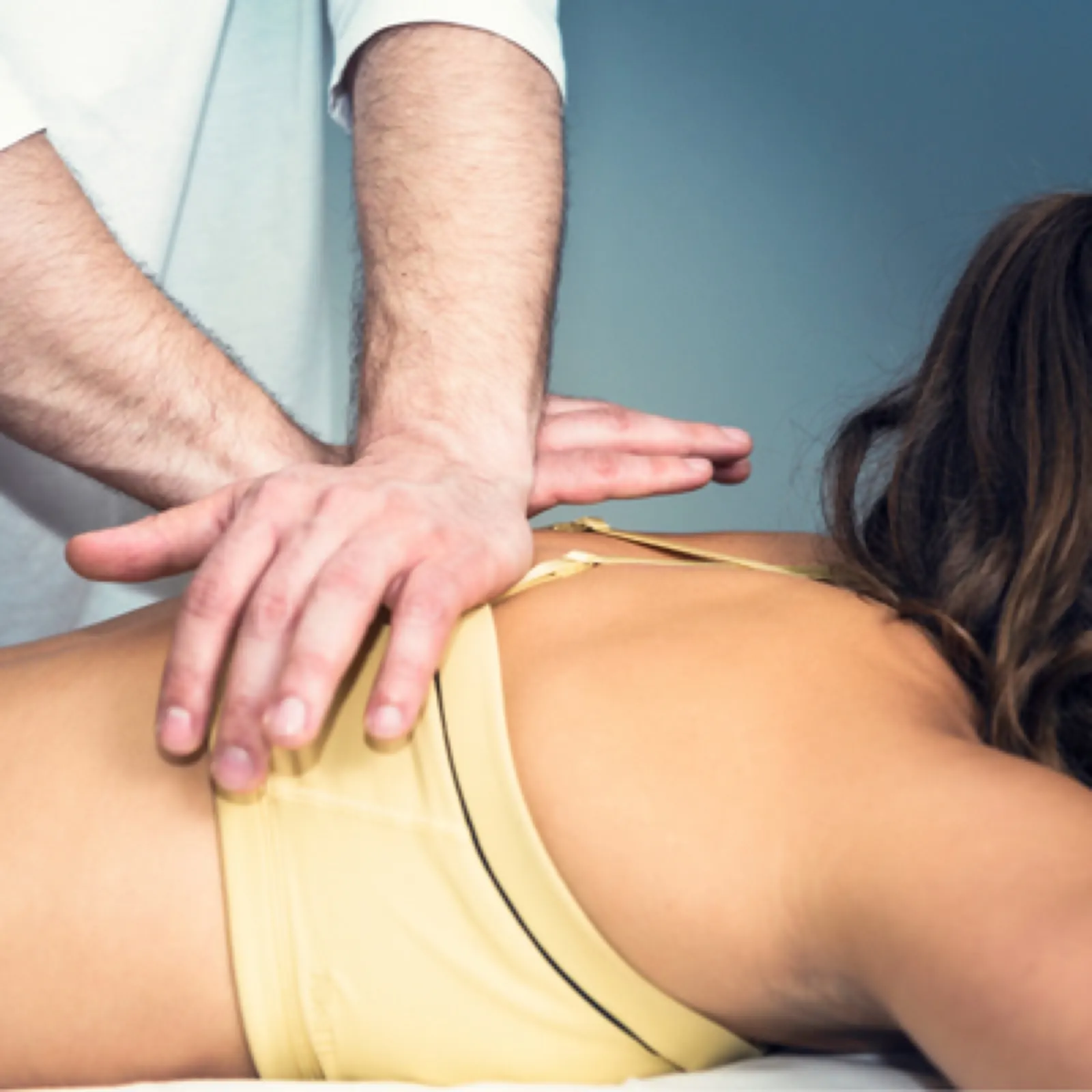
We do not treat a spot. We treat a person who feels something at that spot.
That is why every session begins with the hands — not with a device.The spinal treatment
Not a single technique but a sequence: within one session we work from the outside in — first the tissue soft and warm, then the targeted stimulus, and at the end the movement you take home with you. Which elements we use we decide together, based on what we find and on what suits you. Not every element is right for everyone.
Massage and fascia work
Broad and deep along the back extensors, the shoulder blades and the iliac crest. Releases tension, warms the tissue and prepares everything that follows.
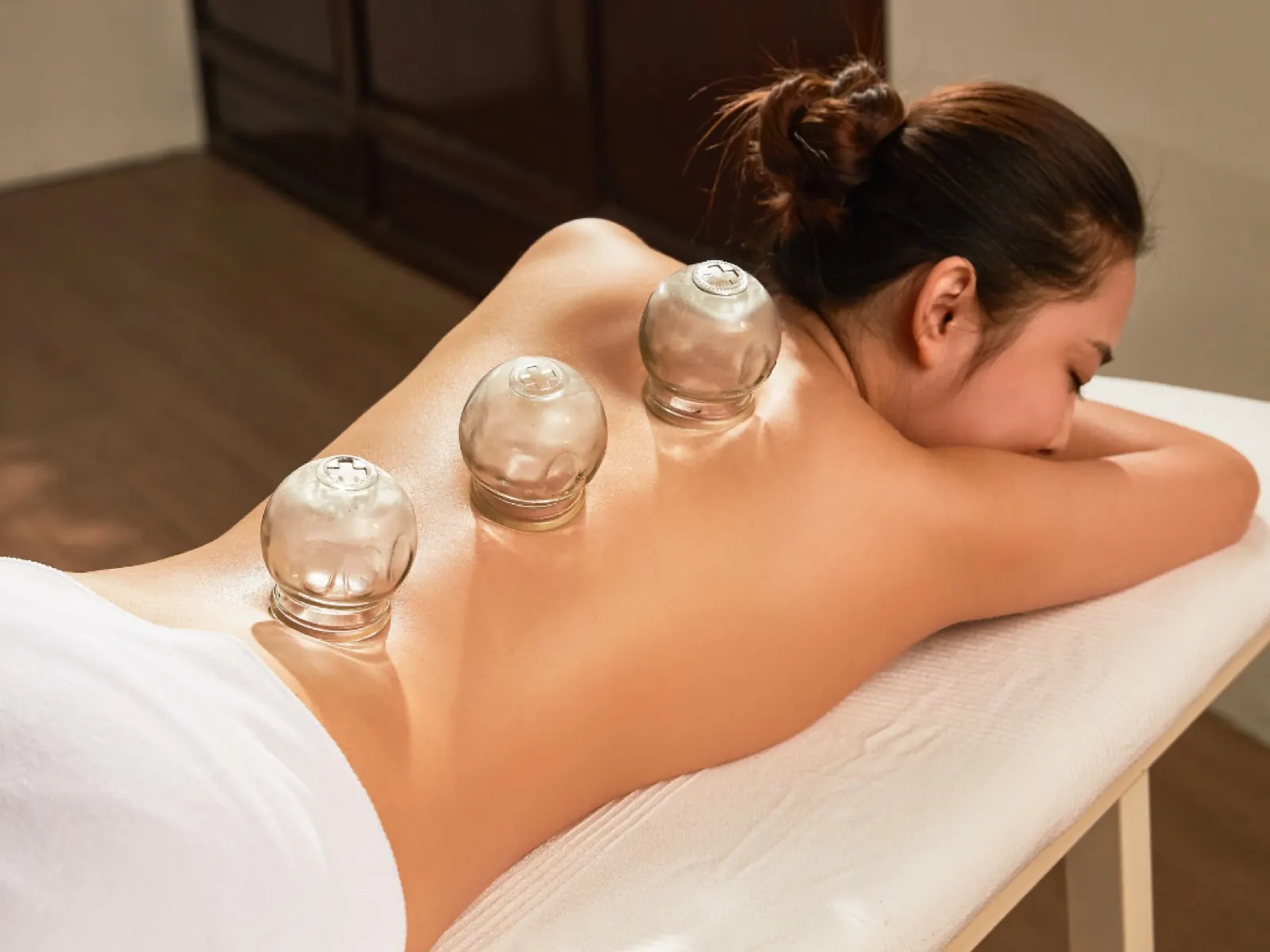
Cupping
Glasses create a vacuum on the skin. As a cupping massage they glide over the back with oil. The area receives more blood and becomes noticeably warmer; the typical marks fade after a few days.

Heat and moxibustion
Moist heat, hayflower, or burning mugwort over a point (moxibustion). Heat is the oldest household remedy for a tense back — and still one of the most dependable.
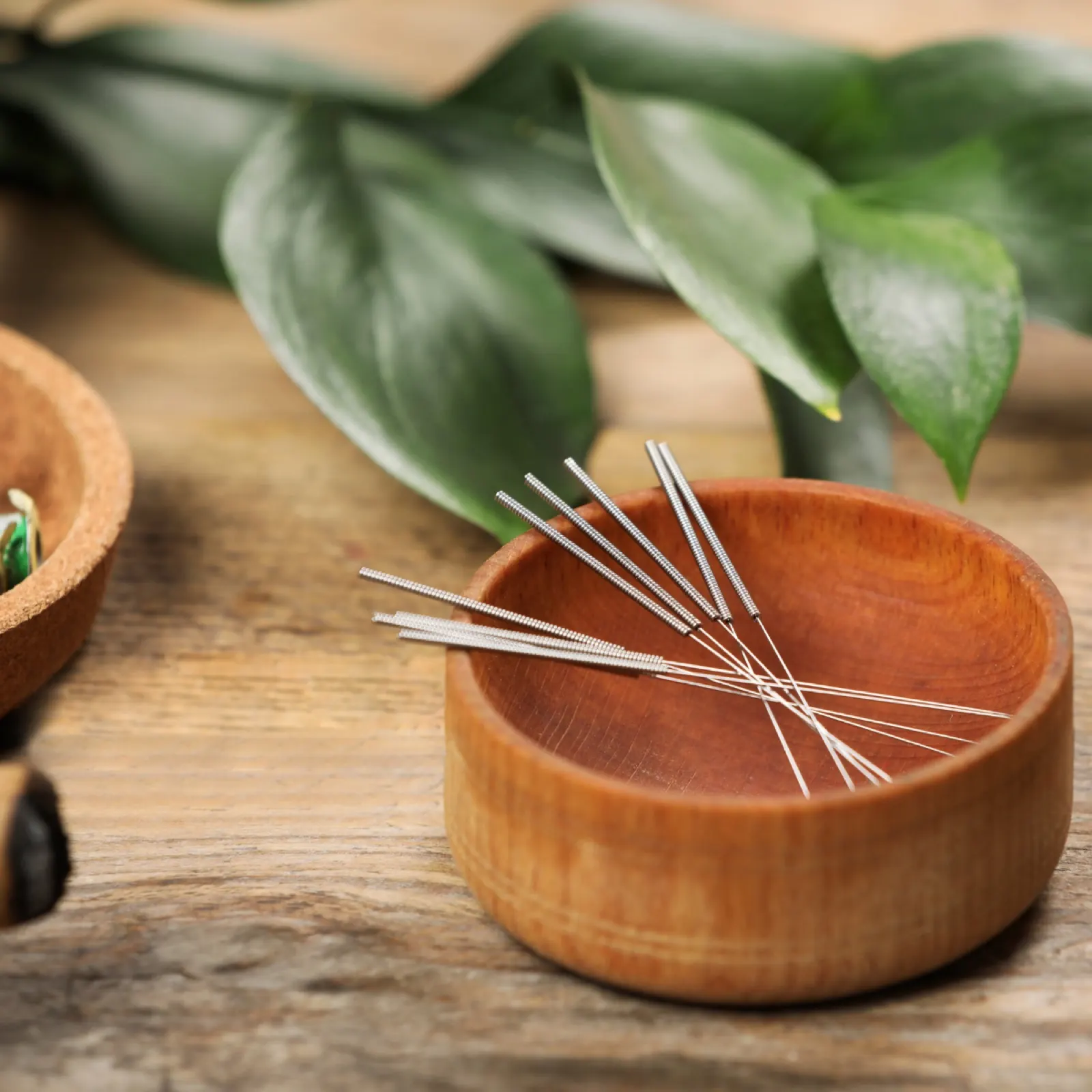
Acupuncture
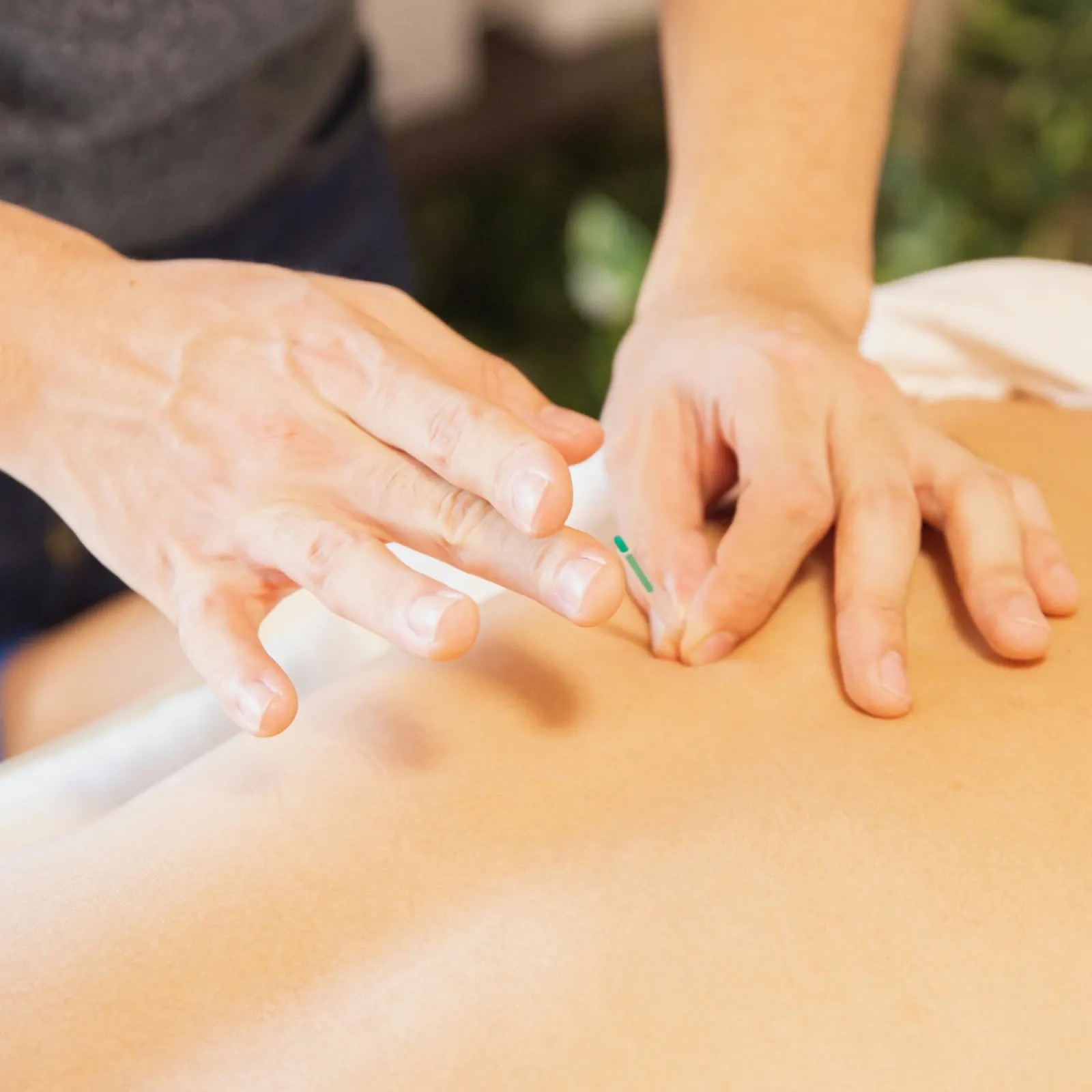
Fine needles at points along the spine and at distant points on hand and foot. The points on the back release locally, the distant points work along the meridian.
Acupressure
The same points, using the thumb instead of the needle. The advantage: we show you two or three points so you can press them yourself at home — between sessions and after the course.
Neural therapy
Small amounts of a local anaesthetic (usually procaine) are placed with a very fine needle as wheals into the skin over the affected segment, or at painful points.
Herbal and homeopathic remedies
Taken by mouth or injected at the same points — arnica, comfrey or combination preparations, for example. We choose them according to what we find and check them against your other medication.
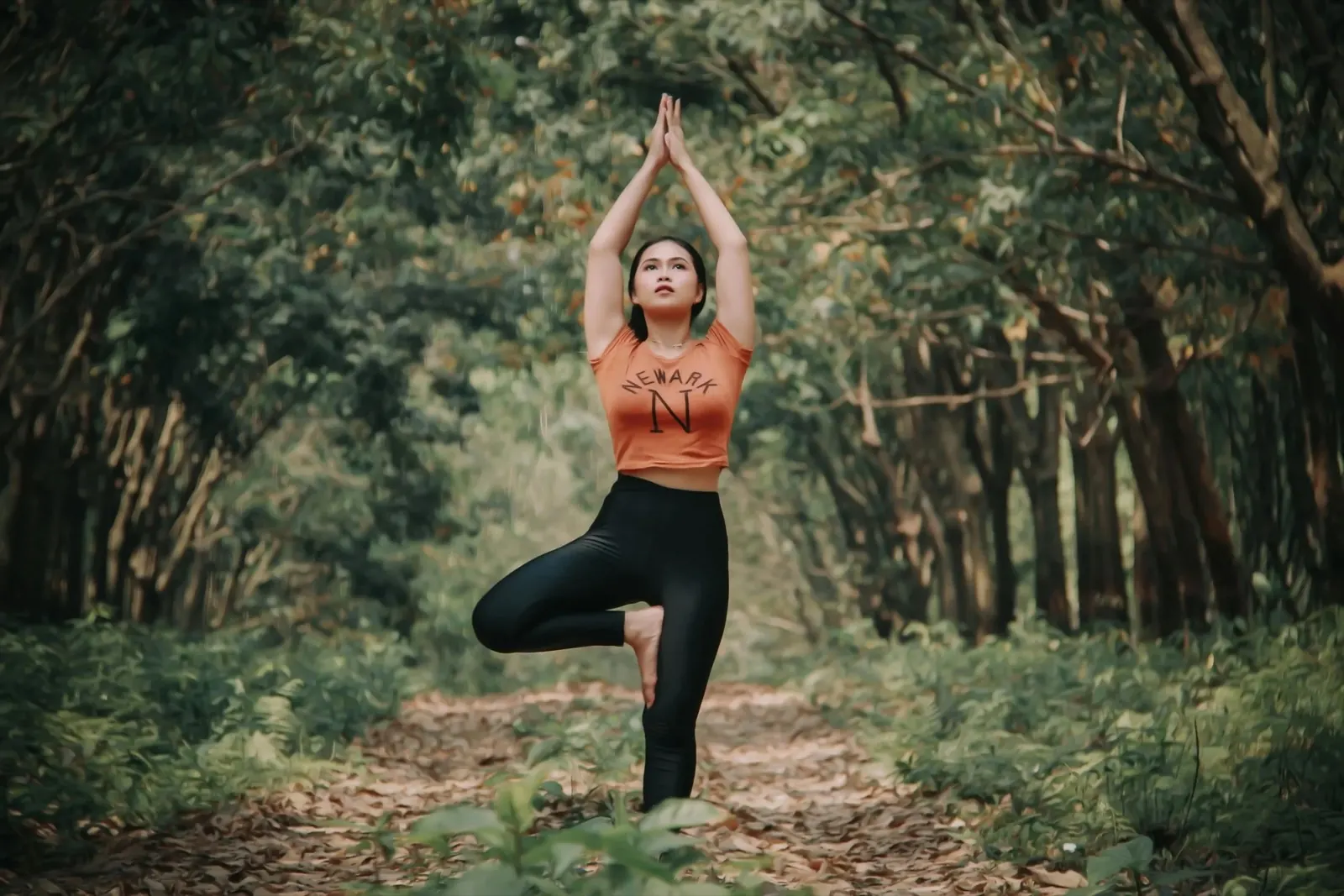
Movement and home exercise
The actual core. At the end of each session, two or three exercises that fit your daily life and need no equipment. Everything else supports this — it does not replace it.
What is not part of it
No manipulation, no cracking of the cervical spine, no injections into joints or near the spinal cord. That belongs in a medical practice. And it does not fit a calm, releasing treatment anyway.
How a course of treatment runs
- 1Conversation and historySince when, where exactly, what makes it better and what makes it worse. Plus sleep, stress, digestion and working posture — because they are part of the picture. This is also where we clarify whether a medical assessment is needed first.
- 2Palpation and movementWe go through the spine section by section, check mobility, muscle tension and pressure-sensitive points, and note which segments stand out.
- 3A plan, not a standard programmeTogether we decide which elements we use, how many sessions we plan and how we will notice that it is working. Four to six sessions are usual, weekly at the start.
- 4The sessionHeat, massage and cupping prepare the ground, then come the targeted stimuli — needles, acupressure or wheals. At the end, the exercises for home. Allow 45 to 60 minutes.
- 5Reviewing and adjustingAfter the third session we take stock together. If nothing has changed, we change the approach or advise further assessment — rather than simply continuing the course.
Holistic means: everything works together
Naturopathy does not separate the back from the rest of the person. A muscle that will not let go, a sluggish gut, sleep that does not carry you, and a nervous system that has been on alert for months — for us these are not five subjects but five views of the same thing. That is why we do not work with one method but with several that complement each other: what the hand releases, the needle holds; what heat opens, movement sets flowing.
Some of these methods have been studied scientifically, others are traditional experience-based medicine — passed on over generations and tested daily in practice. We combine both, because both want the same thing: to put the body in a position to regulate itself. Not to work against it, but with it.
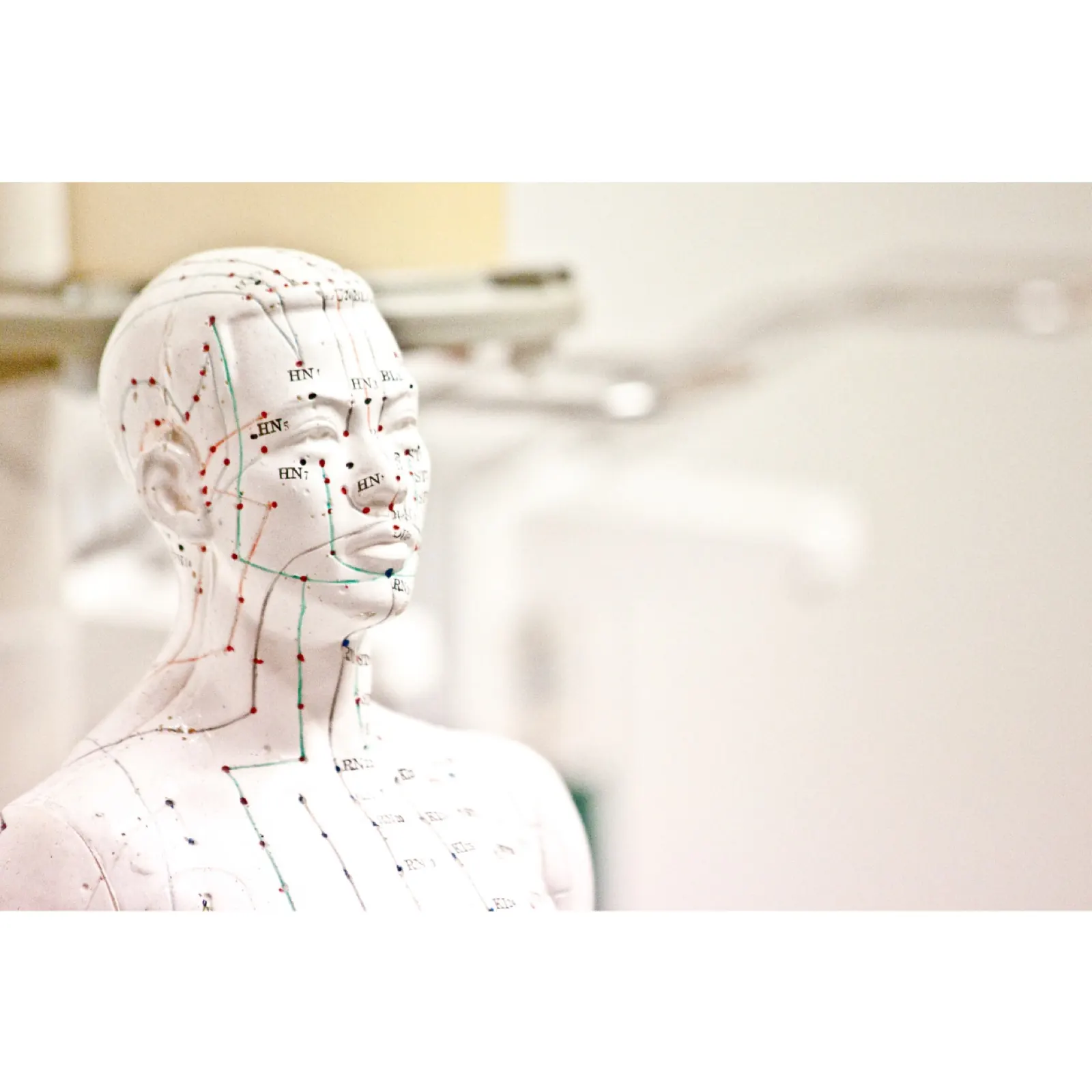
What a session sets in motion
- 01Releasing tensionA muscle that has been holding on for weeks cannot let go by itself. Heat, hand and needle take the work off it.
- 02CirculationIrritated tissue stays irritated as long as too little reaches it. Massage and cupping bring warmth and blood to the area.
- 03Lymph and eliminationWhat builds up has to drain away. The lymphatic system lives on movement, on breathing, and on what we set in motion in the tissue.
- 04The nervous systemThrough the sympathetic trunk, tension in the back hangs together with inner tension. Calm in the segment is calm in the whole system.
And if it does not work
We promise no cure. What we do promise: after the third session we look at it together. If nothing has shifted, we change the approach or advise a medical assessment — rather than simply continuing the course.
When a doctor must be seen first
With these signs we do not treat but ask you to see a doctor promptly — in the first three cases immediately:
- Paralysis or increasing weakness in a leg or arm
- Numbness in the saddle area (buttocks, inner thighs)
- New problems passing urine or stool
- Fever, night sweats, unintended weight loss
- Pain that increases at night when lying down and does not ease
- A fall, an accident, or known osteoporosis
- A history of cancer, or taking cortisone over a longer period
- Pain following spinal surgery
When individual elements are not an option
Needles, wheals and injections
Not with a clotting disorder or blood-thinning medication without medical consultation, not with a known allergy to local anaesthetics, not with inflammation or broken skin at the site, not with a fever. During pregnancy only to a limited extent. Possible effects: a bruise, a brief feeling of faintness, rarely nerve irritation.
Cupping and heat
Not with blood thinners, not on inflamed, injured or very thin skin, not over varicose veins, not with impaired temperature sensation (for example with nerve damage from diabetes). The cupping marks are intended and usually fade after three to seven days.
Please tell us beforehand which medication you take — particularly blood thinners, cortisone and anti-rheumatic drugs — and whether you are pregnant or might be.
Frequently asked questions
Does tension at a particular spot mean the corresponding organ is diseased?
No. The mapping in the diagram describes which nerve pathways converge — it is not a diagnostic key. Supply areas overlap and differ from person to person. A conspicuous point is a hint worth following up, not a finding.
Is anything manipulated or cracked?
No. We work with soft-tissue techniques, heat, pressure and needles. Sudden manipulation, particularly of the cervical spine, is not part of this treatment.
How many sessions are needed?
Four to six are usual, weekly at the start. After the third session we take stock. If nothing has changed, we change the approach or advise further assessment.
Does acupuncture hurt?
The needles are very fine. Most people feel a brief prick as they are placed, then a sense of heaviness or a slight pulling. If something stays uncomfortable, say so — the needle can come out at once.
Can I work afterwards?
As a rule, yes. After cupping and massage many people feel a little tired and should drink plenty that day and avoid heavy physical strain. After wheals the site may burn for a few hours.
Does health insurance cover the cost?
As a service of a naturopathic practice we bill privately. Private insurers and supplementary policies reimburse different amounts depending on the policy; statutory insurers usually do not. We tell you the cost before the first session.
Does this replace medical treatment?
No. This treatment accompanies. With the signs listed above, and with anything that points to a specific cause — a disc, a fracture, an inflammation — the assessment belongs in a medical practice, and we will tell you so.
A look at your back
We begin with a detailed conversation and a physical examination. After that you will know whether and how we can help — and whether something else needs attention first.
Natura Heilpraxis is a naturopathic practice (Heilpraktiker). The methods described belong to naturopathy and to traditional experience-based medicine. They do not replace a medical diagnosis or necessary medical treatment; no outcome can be guaranteed. This text is for information and does not relate to any individual person.
Anatomical details on the spine, the autonomic nervous system, Head’s zones and the lymphatic system follow standard textbooks, where the mapping of segment to organ is described as variable.