Natura
New Findings on the Assessment of Thyroid Values

The thyroid is a vital hormone gland. It plays an important role in the metabolism, growth and maturation of the body and helps regulate numerous bodily functions. To do this, it continuously releases a certain amount of thyroid hormones into the blood. The two most important hormones are thyroxine (T4) and triiodothyronine (T3). Both contain iodine – thyroxine has four iodine atoms, triiodothyronine correspondingly only three.
Under certain conditions, such as serious illness or extreme stress, the production of rT3 can be regarded as a mechanism by which the body saves energy by reducing the activity of thyroid hormones (Modern Hypothyroid Care | Paloma Health). rT3 is often referred to as the "hibernation hormone" because, in times of stress and chronic illness, it can lower the metabolism by competing with free T3 (fT3) for the receptor sites and thus blocking the action of T3 (Thyroid Lab Interpretation Guide).
Function and Action of T3 and T4
The thyroid hormones T3 and T4 act in the cells and control the expression of certain genes. This means that every cell contains the complete genetic information, i.e. all genes are present in every cell. However, only very specific genes are "needed" in a cell and only these are "switched on". This activation of genes to produce the associated proteins is called expression.
The effects of the hormones are expressed in:
An increase in basal metabolic rate and heat production
An increase in glucose metabolism, the citric acid cycle and the respiratory chain
Regulation of fat metabolism
Promotion of bone growth and brain development
An increase in the contractile force of the heart muscle and cardiac output
Regulation of connective tissue metabolism
The Significance of Reverse T3 (rT3)
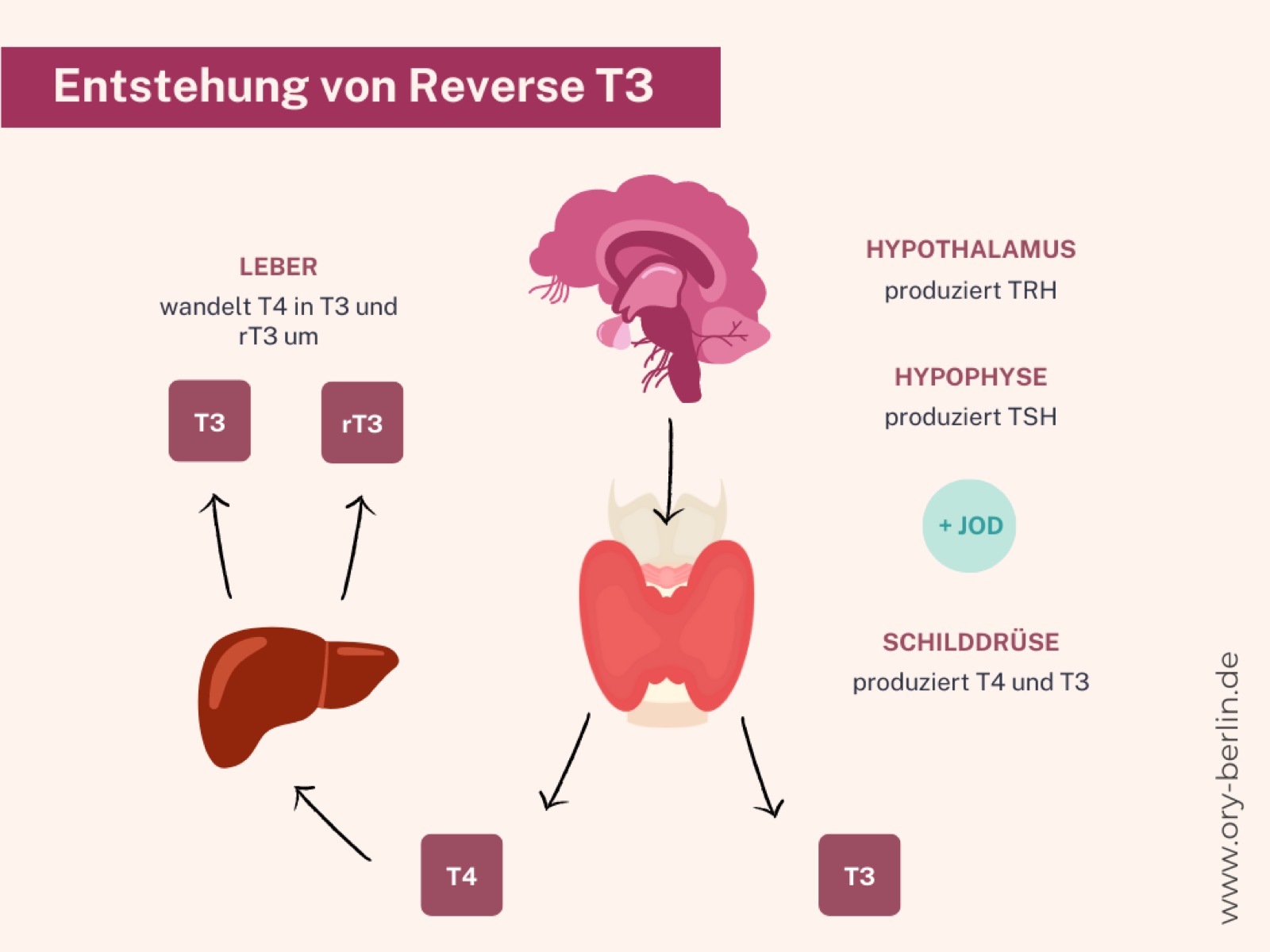
Reverse T3 is a biologically inactive form of T3. When the liver converts T4 to T3, it also produces a portion of reverse T3. The body converts T4 into rT3 in order to dispose of excess T4 that is no longer needed. On the other hand, elevated rT3 inhibits the conversion of T4 to T3 – a possible vicious circle with incorrect T4 substitution.
T3 and rT3 occupy the same receptor sites. However, T3 activates the receptor, whereas rT3 does not. With high rT3 production, the client may show symptoms of hypothyroidism (underactive thyroid) even if the values appear normal. Elevated rT3 values can therefore indicate reduced thyroid function.
This is often also a consequence of mitochondrial dysfunction. Consequently, any disease process associated with mitochondrial dysfunction can be associated with elevated rT3 values, for example:
Diabetes mellitus
Obesity
Depression, anxiety
Neurodegenerative diseases
Fibromyalgia
Migraine
Inflammation or chronic infections
Elevated rT3 Values: Approaches in the Specialist Literature
Since rT3 is derived from the conversion of T4, the specialist literature discusses adjusting the T4 dose (L-thyroxine) and partly using small doses of T3. Any change to thyroid medication is made exclusively by the treating physician.
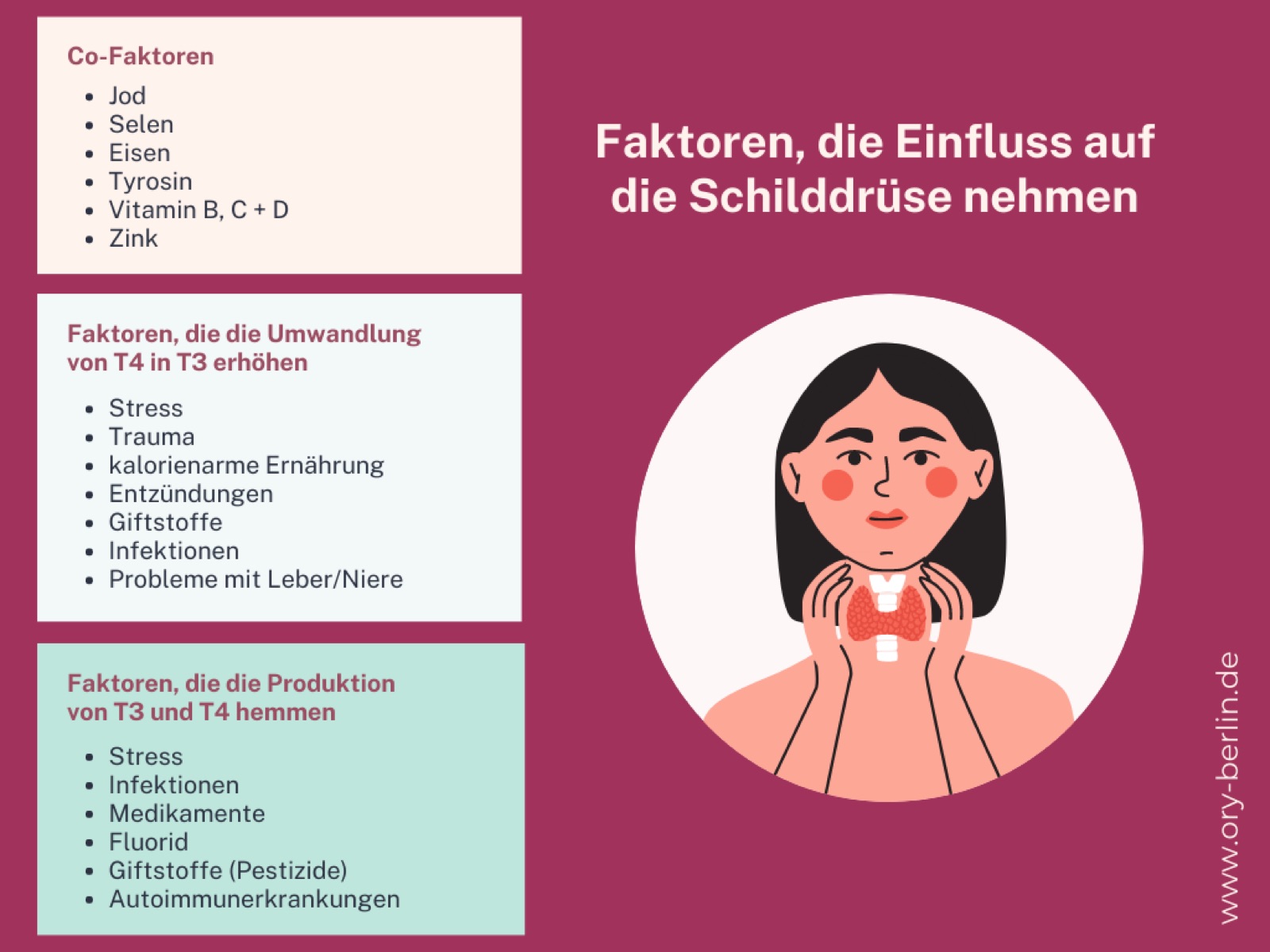
In addition, stress reduction is very important, as chronic stress increases cortisol levels in the body. This in turn reduces the conversion of T4 to T3 and can lead to an increase in rT3.
It is also important to check selenium and iodine status as well as iron stores (low iron levels can be associated with high rT3 values). Treating possible infections and avoiding environmental toxins and heavy metal exposure are also important.
In functional medicine, the following cofactors, among others, are described in connection with mitochondrial metabolism:
Magnesium glycinate (chelated form of magnesium)
D-ribose (natural sugar)
L-carnitine (amino acid)
NADH (NADH is the biologically active form of vitamin B3)
Alpha-lipoic acid (sulfur-containing fatty acid)
Taking a Closer Look at Thyroid Values
At Natura Heilpraxis, you have the option of having your thyroid values determined through a venous blood draw.
In addition, there is the option of supplementing vitamins, iodine and cofactors – either in the form of a dietary supplement or through infusion therapy. If you have any questions or would like advice, call us directly at the practice on 030 88663373 or book an appointment online.
Sources: 1
Professionally responsible: Yesha Karmeli, naturopathic practitioner (Heilpraktiker), Natura Heilpraxis Berlin. This text provides general information and does not replace individual advice.