Natura
What Is Holistic Medicine?
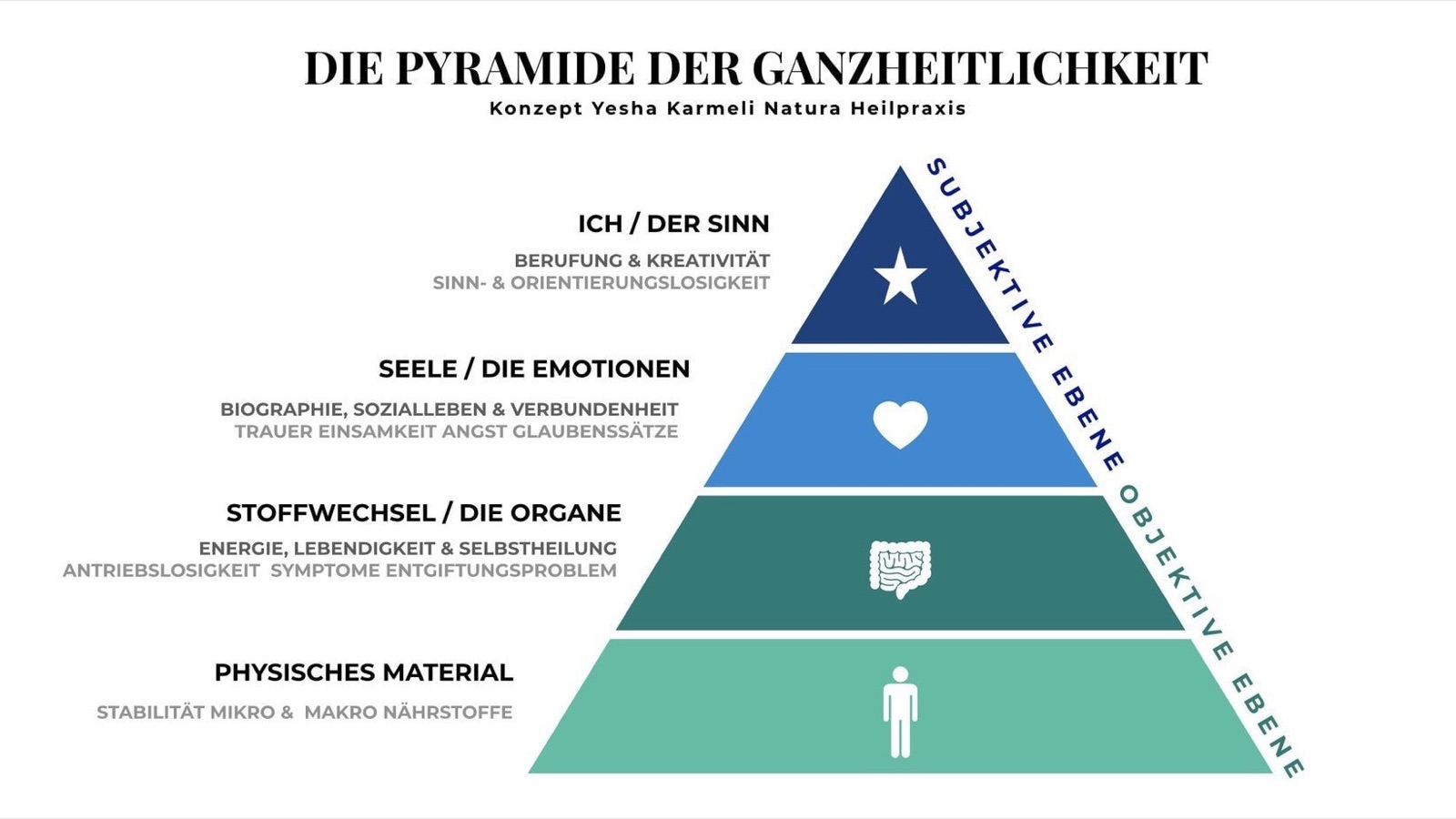
In holistic medicine, mind, body, and soul are understood as a unity. Our body is a unique communication system in which information is constantly exchanged between cells – every millisecond. They are interdependent in the way they function and react sensitively to all external influences. If the soul is ill, the body seeks a way to express its pain, and vice versa. Usually, many factors interact and reinforce one another, affecting our psyche and our body. According to the holistic view, various symptom complexes and even serious illnesses can develop as a result. The so-called cry of the soul for attention is clearly expressed. Holistic medicine focuses above all on the person on their path through life as a whole and not just on the symptom of the illness. Possible causes of illness can include interference fields in the dental area, toxins, metabolic disorders, unresolved infections, food intolerances, poor diet, or, very often, emotional components. After an introductory conversation as well as a GRT (basic regulation test) and, if necessary, blood tests, we create an individual, holistic treatment concept for each patient.My method is based on using the interaction of:
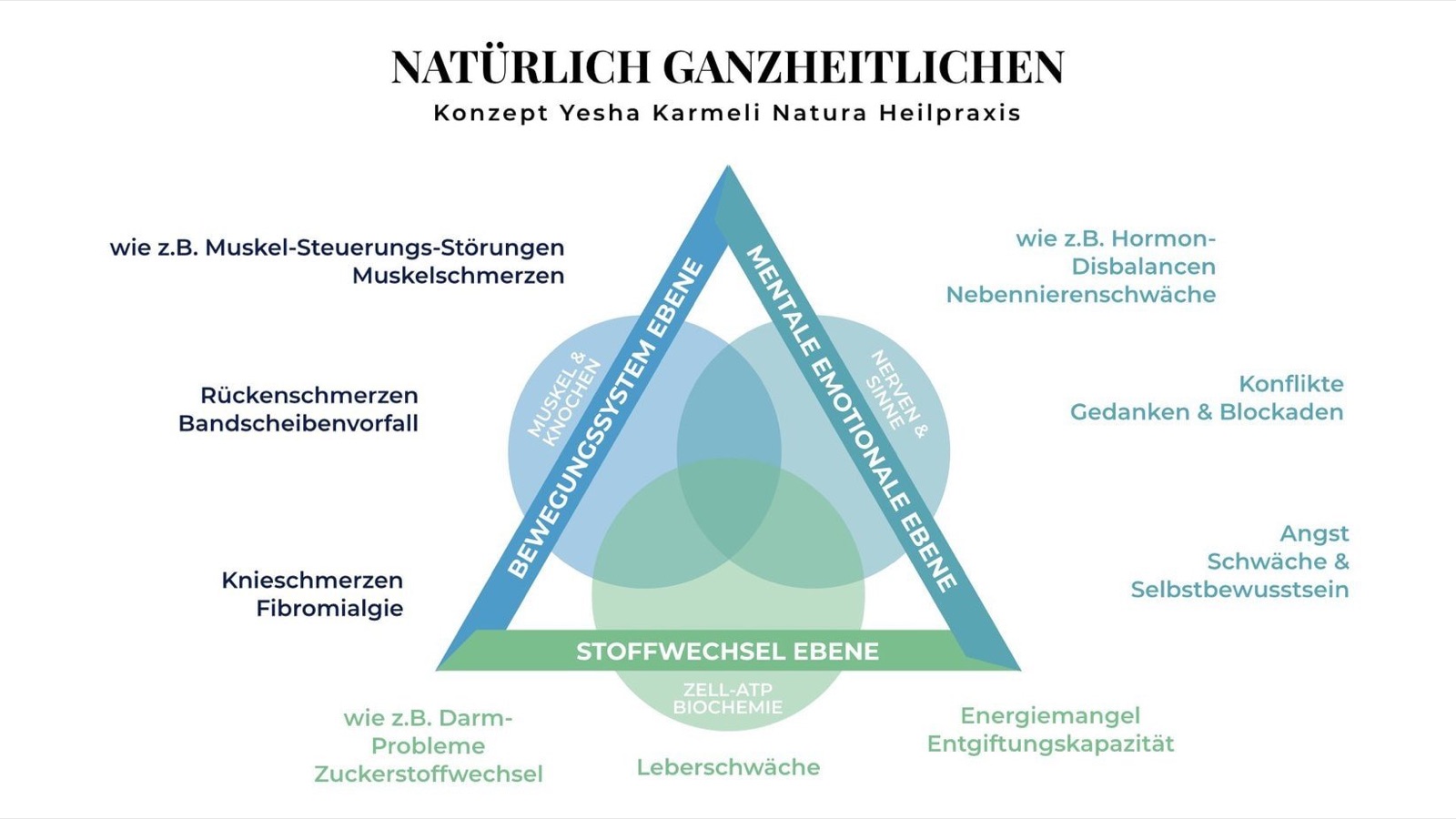
The musculoskeletal system, such as the muscles
Biochemistry - metabolic processes
The hormonal and nervous system - the soul
Each aspect provides insights into the others and allows for a holistic view.
Professionally responsible: Yesha Karmeli, naturopathic practitioner (Heilpraktiker), Natura Heilpraxis Berlin. This text provides general information and does not replace individual advice.